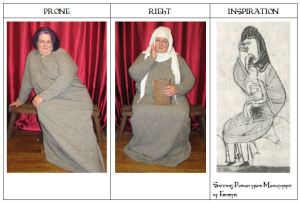
This is the next in a series of tryptychs that will regularly appear here that show what some people think is an adequate representation, what is an adequate representation (in my mind at least) and the original inspiration for my view.
My thanks to K’La Albertini–not a reenactor–who dyed her hair and helped me out in this project!
October 28, 2014 | Categories: Uncategorized | Leave a comment
To my mind, the main purpose of reenacting is not merely to entertain but to educate. I realize that for many reenactors and for many societies this is not a popular view. They are doing things, they tell me, for fun, to honor their ancestors and things a little bit wrong is not a serious matter. To a generation raised on fantasy novels, on fantasy films and on fantasy comic books, this is often a foreign concept. If they are wearing something that is a little bit different from modern dress, that often seems to be enough, but to my mind that is not enough at all! Perhaps the most significant thing learned from a recent weekend was that any so-called reenactor who wears or uses something that is out of period, that is imaginative or fanciful and not based on solid research is actually performing an act of misinformation. Any of the MoPs who look at them tend to think that they are all absolute accurate in their garments and gear, that they have all done exhaustive research and that they all have the highest integrity. The MoP might therefore assume that the average Norseman of the period wore black, wore spectacles, wore turtlenecks, wore leather loafers and wore a belt at least five inches wide. As I waited at the table set up before the showing of “Vikings Live from the British Museum” at a local theatre, one of the curious asked how much I liked “Vikings.” I replied that I did not like the inaccuracies, and he looked surprised. “Like what?” I replied, like the clothing. He then asked, “What do you mean, what they wore was not accurate? What did the Vikings normally wear?” I stood and stepped back. Something like this, I said. Trousers, an under tunic and an over tunic. In linen in wool, and certainly not leather leaving the arms or chest bare. He nodded and said, “Oh. I see what you mean.” I would have been unable to do this if my clothing was not accurate, and I would certainly have felt responsible for miseducating him. So whenever you are presenting a display for the public, not a bufu (By Us, For Us) event where you can present as much fantasy as you want, you are obligated to make everything as accurate as possible, just to educate the MoPs properly. You are dealing with people who are not members of your society who are looking at you, who are judging your presentation and who are trusting that you will be able to learn from you. You must make certain that you dress in the most accurate manner, that you use the most accurate gear, and when you must compromise the accuracy—generally for safety reasons or because the actual thing would be too expensive—you must note the deviation from true accuracy. For example, in my laece cist, I have the copy of a whip that was used to beat out the demons that caused madness. The original was made of porpoise hide; but because that is now illegal, I worked with my leather supplier for a likely alternative. I used lamb leather, which was grey, light and smooth enough that it stood in good stead, but I always mention this to the curious MoP. Most MoPs will readily understand this, appreciate the candor and as a result of this honesty, learn something they did not previously know. Unfortunately, it seems as if some reenactors do not want to educate people; that is too much like school. They just want to entertain people as well as possible and to receive as much applause as they feel they deserve. In one of the most disturbing conversations I had recently, a participants told me that she did not want to do reality-based reenacting because that was simply too difficult, that it was disagreeable, that she was doing this just to have fun. I do not know if she was denigrating research entirely or just the research that a good impression required, but it left me shaking my head. In my mind, I was thinking that she should not call her society a medieval one, that she should go do steampunk or cosplay at a science-fiction convention. Because the idea of dressing up and presenting yourself in quasi-accurate clothing and saying that this clothing is an accurate representation of the clothing of the time portrayed—when they are not—is not proper. Even surrounding yourself with articles not of that period is unsettling to me; and I hope that I do not do that in my impressions! For me, being surrounded by fellow reenactors who share this belief is a relaxing and enjoyable experience. To have the little points of inaccuracy in the portrayals is to me very unsatisfactory and something that I hope I never do regularly again!
October 20, 2014 | Categories: Uncategorized | 2 Comments
It came to me recently that people might be interested in knowing what books on the Viking Age I value over all the others. These are books mainly on Scandinavia and on England, which are the center of my interests. Please note that in many of these cases, I list two or more books in the same category and counted them only as one book. Mea culpa. It was a way to publicize a few more worthy volumes that I recommend that people read and keep in their libraries.
I have stayed away, for the most part, from popular overviews, pure academia, lists of facts, histories of kings, historical fiction and books on reenacting philosophy. We are interested here in exploring the everyday life of the time, something between Susan M. Margeson Eyewitness Book for children, Viking, and Marianne Vedeler’s specialty academic book, Silk for Gold.
I realized as I was editing this I did not include any martial books. While I realize the thud and blunder for many Norse reenactors, I guess that it is not that important to me. I also have eleven categories and was unable to include Stephen Pollington’s Leechcraft: Early English Charms, Plant Lore, and Healing, but I would like to state here that any of Stephen’s books are very worthwhile!
10—PERIOD BOOKS
While it would be popular to list such books as The Havamal and The King’s Mirror, various sagas and the eddas, the fact remains that these are not really products of the Viking Age. They were transmitted orally, probably changed over time and location. The sagas and other writings were not written down until two or three hundred years after the end of the Viking Age by Christian writers for Christian authors and probably contain vastly altered or even invented segments and details. Whether they started out as factual accounts or not, they no longer necessarily are. Still, the Sagas are illuminating and valuable pieces of literature, I recommend The Sagas of the Icelanders, a collection of Icelandic sagas which contain not merely new translations of the sagas but extensive appendices, notes, glossaries and illustrations that are very helpful in understanding the Viking Age. In terms of historical writings, one needs to look at Beowulf. It is considered the first English epic, though it might have originated elsewhere, It comes down to us from a written copy created in the tenth or eleventh century, so we know that this is probably what the people thought of at this time and was not being interpreted by later writers according to later viewpoints. Modern translations and editions are often abridgements or rewritings, and you need to carefully regard your volume. I recommend the recent translation by Seamus Heaney, which is available in several editions (including an audiobook so you can hear it orally in the way its original audience did and an illustrated version that gives illustrations to what is described in the verse). It manages to promote the alliterative verse of the original and still be very artistic and poetic. Reading Beowulf, especially in connection with recent discoveries such as the Staffordshire Hoard, shows that the writer was aware of what various artifacts looked like. And if one must look beyond the obvious, to the kennings and poetic allusions, that is a small thing to do and in fact helps you understand the era a little bit better.
9—IN THE OLDEN TIMES
Of earlier books, I might mention two of the first solid pieces of scholarship of the Victorian Age and early twentieth century: The Viking Age I and The Viking Age II by Paul D. Chaillu (perhaps the first book on the culture and still rewarding even if it is not uniformly up to date, featuring line drawings of artifacts) and Social Scandinavia in the Viking Age by Mary Wilhelmine Williams (from the early twentieth century, a combination of Victorian and Modern prose). Somewhat later is The Viking by Bertil Almgren, a large-format and heavily illustrated book that tells a lot about how certain things were accomplished Norse culture. Outdated in some areas, but well worth it if you are willing to check on statements; a good overview of inaccuracies may be found at Carolyn Priest-Dorman’s “Brief Critique.”
8—THE BAYEUX EMBROIDERY
We have avoided books collecting prints of artwork, though there are many, often of high quality. However, because of its content we have included this. There are many books on the Embroidery, ranging from large-format facsimile reproductions of the Embroidery to an excellent history of the Embroidery, The Bayeux Tapestry: The Life Story by Carola Hicks. However, my favorite is the French-published The Bayeux Tapestry Embroidering the Facts of History edited by Bouet, which has a number of interesting articles, including one on the physical items seen in the embroidery and one that shows photographs of the back of the Embroidery.
7—ILLUSTRATIONS OF ARTIFACTS
We have mostly stayed away from books with photos of artifacts, though they can be greatly helpful. We have also avoided for the most part books of line illustrations, partly because we remember Herbert Norris. However, this oop museum catalog, From Viking to Crusader, is an invaluable collection of photographs and descriptions of artifacts. Later books have larger photographs in color but not nearly as extensive and illuminating. This book should be brought back into print but probably never will be 😦
6—YAT
There are a number of volumes available from the York Archaeological Trust, and they are all very well written, well illustrated and highly recommended. Books are available in print editions, and many out of print are books available as free pdf downloads. My favorite, dealing with shoes, belts and scabbards is Leather and Leatherworking in Anglo-Scandinavian and Medieval York by Quita Mould, Ian Carlisle and Esther Cameron.
5—ICELAND
I have a failing for Iceland and its history. While there is an excellent book by Magnus Magnusson called Iceland Saga, I find myself returning to Viking Age Iceland by Jesse Byock, which contains much information about culture and life of that era that I find rewarding and illuminating.
4—NORSE EXCURSIONS INTO BRITAIN AND IRELAND
Katherine Holman’s The Northern Conquest is a wonderful look at the invasions and conquests of the Norse in Britain and in Ireland. It is based on much of the most recent research and discoveries, and she makes worthy statements on Norse-Englisc communication, on Norse religion and on the assimilation of the Norse into foreign cultures. Very worthwhile.
3—EVERYDAY LIFE
There are a number of books on everyday life in the era, usually entitled Every Life… or Daily Life… I have an acknowledged failing for volumes that speak on everyday life rather than on the lives of the posh and royal, and certainly not on lists of dates, events and war. My favorites are Daily Life of the Vikings (The Greenwood Press Daily Life Through History Series) by Kirsten Wolf and Daily Life in Anglo-Saxon England (The Greenwood Press Daily Life Through History Series) by Sally Crawford. These volumes are part of an exemplary series that is miles above similar volumes such as those by Simpson and Quennell.
2—BOOKS ON CLOTHING
Two very good and recommended overviews of recent and older clothing research are Viking Age Clothing by Þor Ewing and Dress in Anglo-Saxon England, Revised and Enlarged Edition by Gale R. Owen-Crocker. It is worth noting that Owen-Crocker’s book deals not only with the Englisc but with Norse living in England as well. Both are well illustrated.
1—THE YEAR 1000
The Year 1000: What Life Was Like at the Turn of the First Millennium by Robert Lacey and Danny Danziger is a very readable account of everyday life in England during the eleventh century, hinging on the illustrations of the Julius Work Calendar. I find myself returning to it time and again and always finding new revelations, explanations and accounts. The one book on the era that I would want on a desert island!
It should be stressed that this is not a definitive list but a very idiosyncratic, personal list. Paraphrasing Win Scott Eckert, there is no doubt that fans of the Viking Age, both in England and in Scandinavia, will take issue with this list or certainly with aspects of it. There might be other volumes that people have found equally or more valuable for them and their interests. I would love to hear from any reader who has another contribution as well as a critique for or against he books listed.
October 12, 2014 | Categories: Uncategorized | Leave a comment


My wife and I just returned from a journey to Minot, North Dakota, where we set up for the seventeenth annual Norsk Høstfest ON 1–4 October, 2014. We were invited up by Tim Jorgensen to be part of the Viking Village. It was a long, exhausting and rushed trip. Certainly if I go again, I will be taking more time and make it a more leisurely trip. Driving 18 hours a day, setting up and being on stage for four days and then turning around to drive 18 hours home is hardly my idea of a vacation!
It was a very pleasurable event. Large and important, it featured singers such as Merle Haggard and was advertised on a billboard as far away as Bismarck. The building set aside for the Viking Village was a bit off from the main hall so there was not much pass through on the first day or two. Then measures were taken by Tim and others to bring attention to us, and the attendance did increase.
The MoP—the participants at the Fest—seemed to be doing things from a grim determination to do justice to their Scandinavian roots, not to have fun but rather just to experience things. Many people, when I went to the main hall, seemed to be walking around with an intent frown on their faces. Fortunately, those who came over to the Viking Village were—or became—much more cordial and smiling. Those who came by were very knowledgeable, asked intelligent questions and did not ask the usual foolish tourist questions. While the fest itself was filled with the usual travel please, Scandinavian kitsch and food (but no herring 🙂 ), intermingled with some stunning artwork and other goods.
The Viking Village was designed, apparently, to be a sideshow that the attendees could enjoy. The fair wanted there to be as many “Vikings” as possible, and accuracy took a very back seat. There were no authenticity regs and no sort of a jury.


There were, to be certain, some very incredible artisans: Woodcarvers, moneyers, metalworkers, beard makes and weavers—and also Telge Glima, a Swedish gaming troupe, and a Jomviking combat group. In addition, there were people selling books, gaming boards, horns and much else. This was the first Viking Age event for some participants, so costumes, accoutrements and the like were not always exemplary. Some interpretations of Norse dress—if interpretations they were and not merely fantastical imaginings—were incredibly dubious. There were some attempts at Viking shoes, but nearly none were turnshoes; one attempt was a modern suede boot with fake fur attached to it!
Interestingly enough, the MoPs we talked to apparently understood how farby some were, and they talked enthusiastically about what we were attempting to do. Julie wrote about one experience:
“On the first day of Høstfest (Wednesday), I was wearing my new grey wool hangeroc and walking in one of the many halls for shopping and one merchant who sewed traditional costumes for dolls came out to greet me and pointed to the top row where there was a doll in a blue hangeroc. She said, ‘I’m still refining the pattern—” I think she wanted to make her doll costume look more like mine! We had a discussion about my tortoise broaches, and how they were not buttons. On the last day, Saturday. she came to find me in the Viking Village because she wanted to get another look and to take pictures. We had a happy conversation, and she took pictures of how the broach was attached. I had Folo take a picture of the two of us because I liked that she wanted to get it right. She then had Folo take a picture with her camera. The whole conversation was very satisfying.”
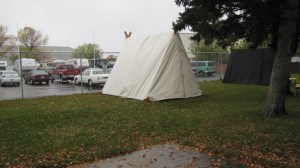
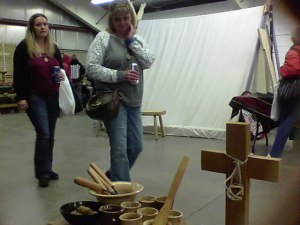
But the participants were friendly, and some presentations were incredible and seemed to attract a lot of attention. They included Jay Haavik, a master woodcarver, who did carving for a recent Oseberg ship; the great folk from Telge Glima; Dawson Lewis, a coin moneyer; Cameron Christian-Weir, an arrowmaker; Pedro Bedard; a metal worker and horn carver; Wendy Speary, who cooked; Rita Nauman, a fiber dyer; Elspeth McBain, a weaver; Craig, a lathe worker; Alysa Harron, a beadmaker; Phil Lacher, a woodworker; Doug Swenson, a blacksmith; and a group from the Sons of Norway. For many, it was their first Viking Age event! Some started out doors, but inclement—cold and wet—drove them all indoors!
In the end, I would like to thank Tim for inviting us and for working so hard in a difficult job! And I want to thank those people who I met and who did very admirable jobs. If we are invited to attend again, I think that I will go. I had a lot of fun, and only the event’s great distance gives any sort of a real downswing to the event! On the whole, it was a very good experience, and I encourage that anyone who is interested in Scandinavian culture to attend and to have an enjoyable time!
Revision: Dawson points out thi was the thirty-seventh Høstfest; the literature I quoted said seventeen, but I had heard the 37 as well and will willingly admit I chose the wrong one. 😦
October 8, 2014 | Categories: Uncategorized | Leave a comment
More wit, wisdom and philosophy from literary works of the Viking Age:
Behold God’s prevailing gifts on earth, discernable
to all souls! His unique powers are bestowed
and apportioned widely to every woman and man.
None are so wretched, unfortunate, or feeble-minded
to believe that the Giver of all has not endowed them
at least with a living breath, speech, and a smart mind
to appreciate their wordly abilities in this life.
Gifts of Men (tr. Jackson)
Grief is remarkab1y hard to shake off. The clouds roll on…A hawk must go on a glove, the wild thing stay there. The wolf must be in the forest, wretched and solitary, the boar in the wood with his strong, fixed tusks. A good man must gain honour in his own country. The javelin goes in the hand, the spear that glitters with gold. On a ring a jewel should stand large and prominent. A river must mix in the waves with the sea’s current. A ship must have a mast, a standing spar for sails. The splendid iron sword must lie in the lap. A dragon must live in a barrow, old and proud of his treasures. A fish must spawn its kind in the water. In the hall a king must share out rings. A bear must live on the heath, old and terrifying. A river must run downhill in a grey torrent…God’s place is in heaven, he is the judge of deeds. A hall must have a door, the building a broad mouth. A shield must have a boss, a firm finger-guard. A bird must play, up in the air. In a deep pool the salmon must glide with the trout. Stirred by the wind the shower shall come down to this world from the sky.
The Laws of Nature (tr. Shipley)
Teacher: What skills do you have?
Fisherman: I am a fisherman.
Teacher: What do you gain from your skills?Fisherman: I get food, clothes and money.
Teacher: How do you catch the fish?
Fisherman: I get into my boat, put my nets into the river and then I cast my bait and wicker baskets, and whatever I catch I take….I catch eels, pike, minnows and dace, trout, lamprey and any other species that swim in the rivers, like sprats.
Æfric, Colloquy (tr. Watkins)
Take any life you choose and study it: It gladdens, troubles, changes many lives. The life goes out, how many things result? Fate drops a stone, and to the utmost shores. The circles spread.
Domesday Book (tr. tr. Masters)
Bare is the back of the brotherless.
From Chapter 84 of The Saga of Grettir the Strong (tr. Morris)
Wondrous is this masonry, shattered by the Fates. The fortifications have given way, the buildings raised by giants are crumbling. The roofs have collapsed ; the towers are in ruins There is rime on the mortar. The walls are rent and broken away, and have fallen, undermined by age. The owners and builders are perished and gone, and have been held fast in the earth’s embrace, the ruthless clutch of the grave, while a hundred generations of mankind have passed away. Ked of hue and hoary with lichen this wall has outlasted kingdom after kingdom, standing unmoved by storms. The lofty arch has fallen.
The Ruin (tr. Kershaw)
Merchant: I embark on board ship with my wares and I sail over remote seas, sell my wares and buy precious objects that are unknown in this country. I bring these things to you over the sea enduring great danger and shipwreck with the whole of my goods hurled overboard and with me hardly escaping with my life….I bring purple cloth and silk, precious stones and gold, various sorts of clothes and dyes, wine and oil, ebony and brass, tin and brimstone, glass and like products.
Ælfric Colloquy (tr. Watkins)
Wood must be hewed in the wind,
row out to sea in good weather,
talk with maidens in the dark,
many are the eyes of the day.
A ship must be used for a swift journey
and a shield for protection,
a sword for a blow
and a maiden for kisses.
Verse 82 of The Havamal (tr. Ball)
Hard-striving soul, greet the wayfaring stranger,
To the keen-sighted singer give welcoming words,
Question to the questing one of all the worlds before,
Implore him to tell of incalculable creations,
The innate artful forces forever quickening
That day after day under God’s dominionBring wonders laid bare to fairing generations.
Song of the Cosmos (tr. Tobin)
Old friends are the last to sever. Ill if a thrall is thine only friend.
From chapter 84 of The Saga of Grettir the Strong (tr. Morris)
Tanner: I buy hides and skins and prepare them with my skill. I make many styles of shoes from them, baskets and clogs, boots and buckets, bridles and harness, flasks and leather bottles, spurs and halters, bags and purses, not one of you would like to spend the winter without my skills.
Ælfric Colloquy (tr. Watkins)
Deeds done will be told of.
From chapter 40 of The Saga of Grettir the Strong (tr. Morris)
In the night, as soon as the king is sated with sleep, it should be his duty and business to center his thoughts upon the kingdom as a whole and to consider how his plans may be formed and carried out in such a way that God will be well pleased with the care that he gives to ,the realm! also how it may be made most/profitable and obedient to himself; further what measure of firmness <ne must use in restraining the rich lest they become too arrogant toward the poor, and what caution in uplifting the poor, lest they grow too defiant toward the wealthy.
From pages 250–251 of The King’s Mirror (tr. Larson)
O Christ, our Morning Star,
Splendour of Light Eternal,
shining with the glory of the rainbow,
come and waken us
from the greyness of our apathy,
and renew in us your gift of hope.
Amen.
Bede
My heart is in Dublin
And the women of Trondheim
Won’t see me this autumn
The girl Has not denied me
Pleasure visits; I’m glad
I love the Irish lady
As well as my young self.
Magnus “Barelegs” Olaffson
(With thanks from Regia mates: Hrolf Douglasson, Gary Golding, Rich Price, Kim Siddorn, Ali Vikingr and Paula Lofting Wilcox)
September 28, 2014 | Categories: Uncategorized | Leave a comment
Woods: When I first realized dimly that plastics were farby, I turned to wood. However, the woods chosen were often no less farby, up to and including plywood (laminated woods date to ancient Egypt and were used sporadically through the ages, though not apparently in the early middle ages, and what we view as modern plywood was patented in the nineteenth century but not regularly and popularly used until the Second World War). You can find a list of native and available woods in an earlier entry in this blog. Please note that in the case of such woods as larch, the wood was not native but was imported, either in a raw of, more likely, a finished form!
Fabrics: When I realized that double knits, nylon and danceskin tights were not at all period, I lit upon cotton. It was a natural fabric, right. It was only later that I realized that cotton was expensive and directed mainly toward the posh and the knowledge that cotton was virtually unknown and certainly unused during the early middle ages was not acquired until later. The knowledge that silk was even more expensive than the finest linen and used mainly as trims came along about at the same time, but the knowledge that raw silk was a byproduct that was usually thrown away even when silk became less expensive and that as a fabric it came to used only in the twentieth century was a very late piece of knowledge. To put it simply, wool and linen were the most popular fabrics—in that order—but not all colors and weaves were period. http://www.squidoo.com/medieval-fabrics-for-re-enacting. Linsey-Wolsey, a combination of linen and wool apparently was not created until the eighteenth century. This has been a very recent discovery on my part, and I am still not entirely convinced…
Shoes: Boots were de rigeur in my early days in “living history.” Black boots were the best. The boots had sewn-on soles, heels of varying sizes and ascended to at least mid-calf. Later, I realized that despite all preconceptions, Richard the Lion-Hearted probably did not wear Harley boots. But the shoes I bought mostly had nailed-on soles; I did buy an early pair of turnshoes, but the maker apologized for not being nailed. The ironic thing is that turnshoes were standard until the end of the fifteenth century, when welted shoes were introduced. I later learned that black leather was unknown and then that the height of shoes during our period was not much above the ankle and certainly not knee- or thigh-high as popular images and notions indicate. A good chart of shoe styles may be found in the YAT’s book on leatherworking.
Tents: Here I am not talking merely of the shapes of the tents—though I never really considered that until I became involved in American Revolution reenacting. After that, thinking on what was used for the tents—certainly not the blue plastic sheets that were everywhere!—I went on to want tens of cotton Sunforger canvas (unfortunately still preeminent since because of availability), flax canvas, wool and hemp canvas. The early discovery that the Norse A-tent was used as a sort of shipboard cabin was illuminating, as were the illustrations of tents being used to dry wet clothes on wash days in eighteenth-century camps! A very late and interesting discovery was that grommets—the brass or metal circles—were not invented until the eighteenth century, and earlier versions in which a brass ring was tied to the fabric with a rope around it, seems to have occurred no earlier than the fourteenth century. We have attempted to develop stitching—from sails for the most part—to substitute and should disguise the metal grommets with an overstitch of some sort (but sloth has delayed that; but eventually…”
Food: Foodstuffs and their preparation never entered into my mind, except when ham was preparing prepared in a kosher kitchen. Only later, reading medieval cookbooks—or rather, their modern redactions and interpretations, though that fact eluded me—I began to understand that there was a period and accurate way to prepare food. Later, I came to understand that certain foods—potatoes, tomatoes and hot peppers for example—were unknown by and not eaten by people in the era. Finding out what was available and eaten was more difficult, although through the efforts of Anne Hagen and others, the information has been gathered from archaeological investigations and became more readily available. So was the availability of “heirloom” vegetables, which still have to be selected through to see that they are period. There are still controversies, and there are still discoveries that I have made with far-ranging affects—I stopped watching the HBO series “Rome” when they dumped over a cart of bright orange carrots—so that this is still a very ongoing process!
Frequency: This is less a physical than an ordinal matter. In the early days, I was little concerned with any kind of or number of instances of provenance for an artifact or a practice. Finding a single provenance was generally unnecessary and unknown. Then, any unique incidence or artifact was enough to justify its appearance in many impressions. However, it was soon apparent that there had to be more than a single incidence of its use or appearance before it was deemed common enough to be legitimately portrayed in ordinary everyday living history. One member of the society to which I originally belonged announced that he preferred objects or practices that were unique because they are more important. In other words, he and others would rather be Roland or Lancelot rather than a common foot soldier of their retinue and certainly not a peasant laborer they might triumphantly ride past when returning to the castle to celebrate a success. As it is, I did not then and do not now want to The epic hero, and this is an approach with which I cannot agree and heartily condemn! Finding multiple incidents becomes paramount to the portrayal of everyday life in a different era. You do not want to deal with things like the Helgo Buddha but instead with things like the Þorr’s hammer. You want something that is seen everywhere that is common. In other words, three examples of the same type of physical artifact descriptions or of a period description—even if they were not identical, since this was the time before mass uniform reproduction—was required for its adaptation. A single artifact could be what Darrell Markewitz terms an “Aunt Martha,” a unique and unuseable object that one got from Aunt Martha and then placed into someone’s grave because ir was a white elephant to him! The rule of thumb developed in most living history—and which I readily adopted once I was exposed to it—was that there were at least two—and now three—separate, unrelated incidents of the artifact or practice had to be found before it was allowed on the line. As noted in Micel Folcland’s Newbie Handbook: “If you cannot provide at least three cases of primary documentation, reconsider the purchase of an article—at least to wear or to use at Regia event. Don’t choose an item because it looks period or because it’s cheap or even because an older member advises its purchase without providing documentation. Many vendors will provide documentation for what they sell; ask for it, and don’t buy from someone who wants to sell you something without being able to provide documentation.”
The examples listed above only touch the surface of the matter. There are many more subjects—metals, weapons, size of jewelry among them—that a good reenactor must consider if an accurate impression is planned.
Keep in mind that any opinion set forth by someone without proper provenance is simply that: An opinion. Perhaps a reenactorism or perhaps just reciting piece after piece of familiar, comforting trivia. For example, the tattoos which were found on Harold Godwinsson at Hastings were apparently invented in the1950s and which have been perpetuated by anyone wishing to justify the historical importance of tattooing
The moral of this essay then is that you should not assume that you know everything about. What are the areas with which you most conversant? These are the areas with which you must be most diligent and most skeptical. All new information might not be valid, but you must be able to analyze the information and not merely reject it as being in opposition to your dogmatic knowledge! Learn to qualify your statements by adding “in my experience” and “to my knowledge” or “from what I have read, experienced or seen” And at all times, in every situation, be willing, be able and in fact be excited to accept the possibility that you must change the matter about which you are so familiar! You mus be willing to amend it, to clarify it and bring new facts and interpretations to bear!
Sôþlîce. Þanc êow, Fæder
September 22, 2014 | Categories: Uncategorized | Leave a comment
Fæder, forgive me, for I have sinned.
I did not start out as an anal progressive. One could say that it is a state into which I regrettably slid…or evolved. I of course prefer the latter. When I started in what I might laughingly refer to as living history—though that term did not attain any type of popularity for another decade or so—or perhaps medievaloid fantasy. I was as a member of a fancy-dress group. For many years I knew that I knew more than anyone else who was not in the group (and who did not have more grandiose titles than I did). Knowledge was just an injection into my brain from that membership card in my pocket! Looking back on it, I have to laugh only because I do not want to cry.
However, the knowledge of those days—spawned by the association with popular culture such as films, teevee, historical novels and comic books—was minimal, and the personal perception of the knowledge immensely wrong. The first glimmer of a consciousness emerged when I designed costumes based on Arabian Nights films and King Kull costumes, and it emerged suddenly as a kind of epiphany that this was not. That fact because evident within a decade. It started with historical cultures in college and then grew with leaps and bounds as I became familiar with folks who did real living history and did not merely say that they did. I realized that I did not know as much as I thought that I did. It became absolutely repulsive within twenty years as I became involved in other societies and I realized how ignorant I actually was. And the more that I knew, as the common folk wisdom goes, the more that I realized I did not know! Many times, it took a while even to consider what I did not know
Gradually, as I looked more intently into matters of everyday life—which is not altogether easy in a culture that attempts to define history as only what happens to the great men—I came to see that so many things that I took for granted, that I never even thought about, were among the things that were most important for defining the culture of a previous time. I came to see that I knew very little if anything. I was forced to do additional research into period sources, period artifacts and contemporary interpretations in order to figure out what was the proper way to do things! I wish to thank the authenticity officers, the historical inspectors, the other folk who are eager to share what they have discovered and especially those people who keep you honest! They have provided—and continue to provide—me with a direction toward which my researches should travel.
Here are, for example, a few areas with which I thought I was very familiar, but which, upon closer look…
Spectacles: The knowledge that Norse warriors did not wear spex was pretty ubiquitous even early on/; the trouble was that I did not realize how much of a burlesque it created. That happened later, in American Revolution reenacting. Until I bought some nineteenth-century frames, I successfully went without spex (the frames were accepted for use in eighteenth-century reenacting because we did not know better; all living history is an evolution!). For a time, I used these frames in medievaloid acting; but I eventually set them aside while in costume and even found a set of more period spex (I was doing fourteenth-century impression then) that I could use for close-up vision. Eventually, when we started doing early medieval impresions, my wife and I both discarded spex at all times. It was easier for me; I had cataracts surgery and the insertion of permanent contact lenses. For her, it was more radical; and when she puts her spex back on at the end of an event, her first line is usually, “Ah, the green blobs have leaves…” The use of contact lenses—permanent or temporary—is a compromise that is not easily discerned by the public.
Hats: Slouch felt hats are dashing, and I eagerly wore them in my early days. In fact, even when I stopped wearing the cowboy hats and other modern incarnations, I still wore the hats. After all, I was doing a fourteenth century impression, and these are examples of their use. When I began to do an early medieval impression, I eventually stopped. Broad-rimmed hats were still in the future. Caps might have been worn by the Norse, though there is no indication that they were worn by the Englisc (see the laborers in the Julius and Tiberius work calendars, working bare headed in the sun), though there is controversy over how these caps were constructed. What I term “baby bonnets” were not yet used, and the most frequently used head covering for some genders was the hood. There is no real evidence for straw and wide-brimmed hats during this era in England and Scandinavia. http://www.vikingage.org/wiki/index.php?title=Sun_hats notes that there is a description of Oðinn wearing a wide-brimmed hat that might be straw, but the saga was actually written down in a later periods! I decided that going about bare headed—for males; wimples and caps were used by females, at least married and older females—is the most common act!
Belts: If I ever thought about belt widths, I’d have assumed that they were as big and bold as the medieval warrior. As time ent on, I learned that wide WWF-style belts were not known during this period. Going from the sizes of buckles and other belt furniture, belts were usually between ½ and ¾ inch (6.35 and 12.7 mm) wide and never more than one inch (25.4 mm ); merely by purchasing thenty buckles (assuredly not buckles from someone who made them bigger and bad because members of their client base knew that belts were all big and bad). In addition, dangling ends were apparently a later development, and belts were tucked into slides like modern belts // http://regia.org/members/basclot3.htm // . The so-called ring belts,_ in which there is merely a brass or other circle at the end of the leather—are totally spurious and perpetuated just by vendors and sellers catering to the lowest denominator, The only buckles which had no tongues merely lost the tongues, so the ring belt is, above all, fantasy!
Names: The idea of regularized spelling is a relatively new concept. It certainly post-dates the invention of the printing press; and even in Colonial America, one finds examples of what Mary Dohan terms “phonetic spellings remarkable even in that relatively freewheeling orthographic age.” Different spellings might refer to the same person, not only different translations and interpretations according to contemporary popularity (Eric, Erik, Eirik, Eirkr) but absolutely bonker spellings can be seen, and writers apparently did not even notice the difference. For example in The Origin of English Surnames, P. H. Reaney writes, “On April 23, 1470, Elizabeth Blynkkynesoppe, of Blynkkynsoppe, widow of Thomas Blynkensope, of Blynkkensope received a general pardon,” and notes that “Here are four variations within two lines written by the same hand. This will give the casual reader an idea of the vagaries in spelling.”
–To Be Continued
September 15, 2014 | Categories: Uncategorized | Leave a comment
How do you prepare yourself for a reenacting session?
I pose this question because I am concerned with the entire reenacting experience. Reenacting is based upon looking at things, experiencing them and teaching them a little bit differently than you might expect . Recognizing what is different, you do not want to speak about modern politics, about modern religion, the science-fiction novel you love so much or about the television show you watched last night.
(Actually, speaking about the first two in contrast to modern day politics and religion is fair, but the third is entirely out of bounds!)
You cannot automatically think the way that someone from the past thought no matter what you think—ad it is probably impossible to do so when making a conscious effort. You have too much modern baggage with you to do this. You cannot logically delude yourself that such a thing is possible. To ignore this is to give a lie to the entire reenacting process. Howev3er, there should always be something in the back of your mind while you are dressed up in your fancy togs that you are not portraying a person of the twenty-first century. That your tastes and knowledge would be different. That what you think is important is going to be different.
It is not important that you see the details of what is going on, at least if you and your fellows have done your bit to make the details accurate during manufacture. At one event, we had a member go without glasses or contact lenses just to prove that it could be done! There has to be a striving for safety. In fact, making our encampments safe for the limited sighted has actually helped us, because we began to clean up the encampment more so that people did not stumble over things so much!
Doctor David Friedman, a Scadian and a proponent of first-person impressions but not of accuracy in the environment, points out that he does wear spex while in his impression notes in his Miscellany that
” Doing without glasses when I am in persona is not merely a matter of being authentic — it is also a striking way of reminding myself that I am in a different world. Fuzzier. As an adult, Cariadoc has never seen the stars clearly, and cannot recognize a friend across the length of a hall. Those are some of the ways in which he is a different person from David.
One might say that this is only important when one is doing a first person—or a second person, as some describe an impression which is mainly first person but which allows the participant to break into third person as needed—impression, however, it is also important for someone doing a third-person impression. It is something that you must always keep in your mind. You must realize that what you pick up, how you sit, how you walk, what you use, affects the way that you are perceived and the illusion that you are attempting to create.
Not only does I help in the selection of clothing and kit, but it helps them to think about what they need to talk about so that they are not talking about modern concerns except in relation to period concerns. Hopefully, it will keep them from thinking about modern concerns in the first place!
It should be pointed out that such a transition is not the exact way that a person of the period would have thought or acted. After all, your knowledge and actions, even for someone doing first-person, are affected to some extent by things that you know that the period person did not, is not a reflection of what the period person thought. There is no way that this is possible. It is a interpretation, and hopefully an interpretation based on facts. However, it is better than coming to an event, putting on fancy dress, shades, sneakers, spending the event texting on your phone about what a grand old time you are having and strutting around like your favorite character from “Braveheart”!
For most reenactors, it is recommended that you have a certain ritual that you perform when you begin a reenacting session. Changing into historical clothing might be good enough for some people, but there is still the natural impulse to move in a modern manner (we shall not mention the desire to emulate what has been seen in popular culture, which often must be avoided as well and requires research more than anything).
The ritual that you follow while converting to, for lack of a better word, a reenactor mindset may vary. Perhaps it is only putting on a certain artifact or making a certain action which helps convert you—at least hopefully—from your modern-day mindset. For some people, it may be just be the act of donning historical clothing. For some, it might be repeating the pater noster in Old English or Old Norse. Or even, for all the fact that it is erroneous, one of the prayers that are being made by a Norse figure from “The Thirteenth Warrior” or similar films.
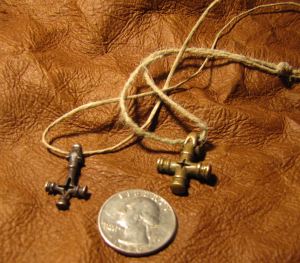
Fenris cross
For example, I have a Fenris (also Fenrir) cross For me, it is a clew to guide my reactions an d thought processes at the time. Just reaching up and touching it reminds me to change my mindset. If I am encouraged to say something political or religious, it provides a reminder that I should not do this and that I should steer the conversation into something that is more period. So at the beginning of an event—actually before the event starts, when I am arranging things and getting them prepared—I give it a kiss, which is a real action which helps me to change the way the way I am thinking. I then hang it around my neck, and I take care not to take it off during public hours. Any time that I do take it off—for example sleeping at overnight events—I make certain that I repeat the process. I again kiss the cross, and I make certain that I do put it on.
At events I use my Fenris cross to enter myself into the proper frame of mind. It is a reproduction of one found in Iceland, in which Norse motifs—the Fenris wolf and Þor’s hammer—is combined with Christian—a cross. I call it my Hedge Your Bets Cross, a dual religious icon for someone who has not settled on a single deity. In the morning, as I say, he might go to Church and pray to Jesus; but in the afternoon, he might embark on a journey and pray to Þor for a safe journey.
This interpretation is controversial, of course. Some people think that it is nothing more than the inclusion of a non-Christian cross in the heathen jewelry (after all, the cross had other pre-Christian meanings and besides, in the thoughts of many heathens, Jesus was just another god, an addition to he Norse pantheon but hardly unique). It seems probable to me that it combines the motifs from two different faiths, but it is not my intent here to debate the matter; for me, it is just different enough that it brings home the fact that things were different in the past!
To me it is a reminder. Just reaching up and touching it reminds me to change my mindset so that if I am tempted to say something inappropriate, it reminds me that I should not do this!
It is suggested then that you come up with your own ritual to usher yourself into the period world. It may not be to your liking—that is why different societies have such different or nonexistent authenticity regs—but you may well find it a very valuable and, indeed, fulfilling!
September 8, 2014 | Categories: Uncategorized | Leave a comment
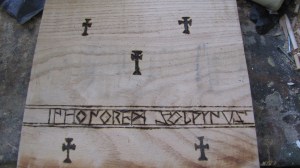
Recently, I have been working on a portable altar in the style of the one found at Jarrow and a reproduction of which can be seen at Bede’s World. That got me thinking about religion in the middle ages. The original notes it is to the honor of Saint Peter; mine is to the honor of St. Olwyn, the patron saint of Micel Folcland. Matters in several books read lately, including a list of tithe days in Larsom’s Canute the Great, combined with the matter and set me scribbling…
The importance of the Church in the middle ages cannot be minimized. The Middle Ages was defined by the Christian Church. So many aspects of medieval life—from the royalty, to the taxes, to some of the actual kit being worn—was defined and regulated by the Church. Any attempt to engage in an historical recreation while not incorporating or disregarding ecclesiastical thought and life is entirely specious and inadequate if not fantasy. What some folk call a medieval reenactment or, indeed, the more ambiguous re-creation but which ignore the Church is doing nothing but having a fancy-dress party. By that, we do not mean just having people walk around in formal ecclesiastical garments but that certain rituals, certain rites, certain practices, the illusion of certain beliefs are presented and in fact required and reenacted. This is, to a great extent, the difference that you will see between a fantasy organization ands serious living history society. At the most, you can only call such half-baked attempts medievaloid or perhaps medievalish.
However, the importance of religion in the culture of the middle ages is not restricted to Christianity. For example, in heathen times the common people of England respected their kings when they were responsible for a good interaction with the deity but not when there apparently was not. As Laurence Larson notes in Canute the Great, “They were to secure the favor of the gods. A failure of crops meant that a duty had been shirked. The feeling lingered for some time after the disappearance of heathendom.” For several centuries afterwards you can still perceive heathen practices and beliefs within the so-called Christianized Europe. This is not to say that they were trying to perpetuate heathen practices. In fact, certain superstitions that we see yet today sprang out of the heathen beliefs ad practices!
In fact, if we look at the battle that was taking place in northern Europe around the time of the Millennium when Christianity tried to assert itself over the prevalent heathenism, one is left with a certain feeling that the people who were to be converted were being succored into the Christian faith by the acceptance of certain heathen beliefs, which were incorporate into Christian thoughts and practices. This is seen as far back as the conversion of th Anglo-Saxons in the seventh century, when Pope Gregory said,
“The temples of the idols in that nation ought not to be destroyed; but let the idols that are in them be destroyed; let holy water be made and sprinkled in the said temples, let altars be erected, and relics placed. For if those temples are well built, it is requisite that they be converted from the worship of devils to the service of the true God …. And because they have been used to slaughter many oxen in the sacrifices to devils, some solemnity must be exchanged for them on this account…. but kill cattle to the praise of God…. For there is no doubt that it is impossible to efface everything at once from their obdurate minds; because he who endeavours to ascend to the highest place, rises by degrees or steps, and not by leaps.”
This quote is, the way, recounted by Bede in Historia Ecclesiastica Gentis Anglorum, quoting a letter to Mellitus in June 601. (We shall not mention the importance of Bede, a cleric, in our understanding of what went on in early medieval English culture…)
Returning to the importance of Christianity during the period, we might mention the reason for Crusades, or the various pogroms that massacred Jewish populations or the brutality seen in the conquest of Jerusalem from Muslims, where an eyewitness, Fulcher of Chartres, who noted in Gesta Francorum Jerusalem Expugnantium that, “In this [non-Christian] temple 10,000 were killed. Indeed, if you had been there you would have seen our feet coloured to our ankles with the blood of the slain. But what more shall I relate? None of them were left alive; neither women nor children were spared.”
However, the importance of religion in the eleventh century in England can be seen much closer than Jerusalem. The sheer requirement of tithes was essential to the conduct of business during the middle ages as can be seen by the list of customary ecclesiastical fees that Larson notes in his biography of Cnut that Church Lights were gathered at the Feast of the Purification (Candlemas, 2 February), Easter Eve and All Saints Day (1 November); the Church Scot on Martinmas (11 November); Peter Pence on Saint Peter’s Day (1 August); Plough Alms on Fortnight after Easter; the Tithe if the Harvested Crops on All Saints Day (1 November); and the Tithe of the Young Beasts on Pentecost.
To ignore these as so many “reenactors” do—or perhaps they have no idea of their existence at all—is to create a fallacious concept of life in the time. In fact, we look at the conflict between the ecclesiastical and the secular cultures during this time, it becomes very important! And its portrayal is essential to an honest portrayal of the culture of the time!
September 1, 2014 | Categories: Uncategorized | Leave a comment

This is the first in a series of tryptychs that will regularly appear here that show what some people think is an adequate representation, what is an adequate representation (in my mind at least) and the original inspiration for my view.
My thanks to K’La Albertini–not a reenactor–who dyed her hair and helped me out in this project!
August 25, 2014 | Categories: Uncategorized | Leave a comment
A few days ago, my wife wondered aloud when modern demarcation of the hours became popular. This was, of course, to be translated as “Find this out; I want to know but not do research!” Here is a brief answer; the exact answer is, as you might expect, a lot more complex and longer!
In ancient history, the daylight was divided into a number of hours (in societies—such as Egyptian—which had sundials, the sunlit hours were divided into twelve parts, which were of varying lengths depending the time of year. The importance of 12 has been attributed to the number of lunar cycles in a year.
Because sunrise, sunset and noon are conspicuous, most societies starting counting hours at these times, and the development of a system of starting at midnight ordinated only later, when mechanical clocks were invented. In fact, before the invention of artificial light more reliable than candles, fire brands and hearth fires, daily tasks started and ended only when light was available. There was simply no good reason to know an exact time!
Anglo-Saxon Time
The Anglo Saxons used the term dægmæl, meaning “day mark,” rather than o’clock. The times were largely based on liturgical hours after the Anglo-Saxons were Christianized, although there were other times generally recognized for the dôgor (consisting of either twelve or twenty-four hours) on the farms:
|
Æring
|
6 am
|
|
Dæg-Gemet/Mæl
|
9 am
|
|
Nôn
|
12 Noon
|
|
Undorn
|
3 pm
|
|
Middel-Æfen
|
6 pm
|
|
Nihte-Gemet/Mæl
|
9 pm
|
|
Middel-Nihte,
|
12 midnight
|
|
Otta
|
3 am
|
(Times are approximate; Old English words taken from A Handy Anglo-Saxon Dictionary by James Harrison)
Liturgical Hours
The liturgical hours—also known as the canonical hours cathedra hours, monastic hours and offices—were based on the requirement for fixed-hour prayers that were standard by the fourth century and became used in both secular and ecclesiastical cases.
|
Matins
|
2:30-3 am
|
|
Lauds
|
5-6 am
|
|
Prime
|
7:30 am
|
|
Terce
|
9 am
|
|
Sext
|
Noon
|
|
Nones
|
2-3 pm
|
|
Vespers
|
4:30 pm
|
|
Compline
|
6 pm
|
(Times are approximate; taken from A Hypertext Book of Hours)
Norse Time
Much of what I wrote about Anglo-Saxon hours is also relevant for the Norse, The big difference is simply that the Norse did not use liturgical hours until much later since they were not converted to Christianity until later. The Norse hours were:
|
Rismál or Midur Morgunn
|
6 am
|
|
Dagmál
|
9 am
|
|
Hádegi or Middegi
|
12 noon
|
|
Undoru or Nón
|
3 pm
|
|
Midur Aftaan
|
6 pm
|
|
Náttmál
|
9 pm
|
|
Elding or Ótta
|
12 midnight
|
(Times are approximate; the site I cribbed these from no longer exists 😦 )
Modern Hours
Fixed modern hours—not determined by the actual length of the sunlit day—seems to have been devised in the eleventh or twelfth century, when clocks made the mechanical division of the time easy and automatic. Prior to that point, clocks apparently mechanically activated bells denoting the liturgical hours, and they were only gradually modified into modern 24-hour segmentation.
August 18, 2014 | Categories: Uncategorized | Leave a comment
I sometimes think burlesque dancer Red Hot Annie was a reenactor in a previous life! Anne is a Chicago-based burlesque performer/ and she regularly posts Burly Q Biz aphorisms over on Facebook, and they are often remarkably pertinent to reenactors. They inspired me to compose a few specifically for reenactors; some are based on what Anne has posted, and some are completely new! https://www.facebook.com/redhotanniechicago
Be honest and thorough. Answer all questions! Remember that one of our main reasons for doing this is to communicate with the public!
Have a single person in charge of arranging for shows, but make certain all members know that they can refer likely shows to that person.
The person ultimately responsible for booking shows should not hesitate to delegate responsibilities but should make certain that he know what is going on.
The person ultimately responsible for booking events should keep other members of the unit apprised of what is going on.
Approach your work with an eye toward the long-haul instead of aiming for immediate pay offs.
When being interviewed, be honest. If you don’t know, say you don’t know. They’re looking for something interesting to print and “I don’t know” is rarely interesting. Being misquoted because you reached for information you didn’t know won’t help your cause. Do not say anything to the interviewer in jest; that—no matter how wrong it obviously is—will be what is quoted as being serious!
Find the time to regularly ask opinions and feelings of each member of your unit. They all need to be heard.
The fee for a show is not always as important as the intangibles. Sometimes the publicity or some aspect of the show or sponsor can be very important!
Answer every email. People will “fill in the blanks” about why you don’t, and they could assume…disinterest…spam…death…
Never ignore any inquiries, no matter how insignificant they might seem. Answer every inquiry to avoid assumptions that you are disinterested or are not available.
Be positive – a beacon of shining light! If you can’t be nice, address the problem or ignore it and move on, but don’t gossip!
Keep a list of all your sponsors so that you can contact them from time to time if they have not contacted you for a while, to let them know that your unit is still in existence and still interested in appearing for them!
If you are no longer interested in appearing at a certain venue or a certain sponsor’s shows—for whatever reason— polite when turning down requests for further show, but be firm!
Set expectations. Be proud of how well you make your presentation and present an accurate image.
Remember that when in costume, you represent not only your unit but all reenactors. But especially your unit!
When greeting a MoP at an event, be the first to say “hi.” Others may be nervous about saying anything, and your shyness may read as snobbery.
Remember it might seem awkward to MoPs to approach you or to ask questions, so do what you can to make it easy for them.
Update your website regularly to keep it relevant. An up-to-date schedule of shows you have booked is essential.
Try to have at least one entirely new presentation for each season. Do not be afraid to return to old presentations that you have not done for a while, but never be afraid to make a presentation better or more accurate.
Give yourself opportunities to learn and to practice activities. Do not hesitate to experiment with risky ideas.
Ask sponsors to give you feedback on your displays and performances. Most are willing to do so if asked but will not volunteer critiques.
You are only as strong as your unit. Do not do it all yourself when someone who does it better wants to help you.
Be prepared for performance. Do not hesitate to practice and always realize that you want to present a professional performance and display.
Know what time you are expected to set up or to display and adjust your actions according to that schedule.
Every social networking site should point to your website. It makes your website appear more important to search engines.
Always practice combat in costume and shoes—especially shoes!
So not publicly denigrate any farby or substandard society that professes to do the same thing that you do. But at the same time, make certain that the public know that there is a difference!
Do not downgrade your requirements for membership and participation just to gain greater numbers. It is better to have five people who are accurately kitted instead of five-hundred who are shoddily garbed.
Members of a unit should know what their key contributions to the unit and to your shows are and how to pull their weight.
August 5, 2014 | Categories: Uncategorized | Leave a comment
More wit, wisdom and philosophy from literary works of the Viking Age:
Things boded will happen, so will things unboded.
From Chapter 14 of The Saga of Grettir the Strong (tr. Morris)
The Lord lavished life on me I had it all
Blessings were rife for me honor in hall,
Clad in the gladsome cloth of the looms
Dyed with the handsome hues of the blooms,
Men the looked up at me, friendship reigned
Filling the cup for me, wine never waned.
The Riming Poem (tr. Stallings)
Where is the horse gone? Where the rider?
Where the giver of treasure?
Where are the seats at the feast?
Where are the revels in the hall?
Alas for the bright cup!
Alas for the mailed warrior!
Alas for the splendour of the prince!
How that time has passed away,
dark under the cover of night,
as if it had never been!
The Wanderer
A man must be a friend
to his friend
and give gift for gift.
Men should use
mockery in return for mockery,and deception in return for a lie.
Verse 42 of The Havamal (tr. Ball)
He [the reeve] must provide many tools for the manor, and keep many implements for the buildings: axe, adze, bill, awl, plane, saw, spoke-shave, tie hook, auger, mattock, crow-bar, share, coulter and also goad-iron, scythe, sickle, hoe, spade, shovel, woad-trowel, barrow, broom, mallet, rake, fork, ladder, curry-comb and shears, fire-tongs, steelyard; and many cloth-working tools, flax-lines, spindle, reel, yarn-winder, stoddle, beams, press, comb, card, weft, woof, wool-comb, roller, sly, crank, shuttle, seam-pegs, shears, needle, beater.
(tr. Swanrton)
Ale is another man.
From chapter 19 of The Saga of Grettir the Strong (tr. Morris)
Cattle die,
kinsmen die,
the self dies likewise;
I know one thing
that never dies:
the repute of each of the dead.
Verse 77 of The Havamal (tr. Ball)
Remember that many a man lives but a brief time while his deeds live long after him; and it is of great importance what is remembered about him. Some have reached fame through good deeds, and these always live after them, for one’s honor lives forever, though the man himself be dead.
From page 205 of The King’s Mirror (tr. Larson)
A man must wait when he speaks oaths,
until the proud-hearted one sees clearly
whither the intent of his heart will turn.
A wise hero must realize how terrible it will be,
when all the wealth of this world lies waste,
as now in various places throughout this middle-earth
walls stand, blown by the wind,
covered with frost, storm-swept the buildings.
From The Wanderer
A.D. 793. This year came dreadful fore-warnings over the land of the Northumbrians, terrifying the people most woefully: these were immense sheets of light rushing through the air, and whirlwinds, and fiery, dragons flying across the firmament. These tremendous tokens were soon followed by a great famine: and not long after, on the sixth day before the ides of January in the same year, the harrowing inroads of heathen men made lamentable havoc in the church of God in Holy-island, by rapine and slaughter.
Anglo-Saxon Chronicle (tr. Ingram)
The day must be praised in the evening,a woman, when she is cremated,
a sword, when it is proven,
a maiden, when she is given away,
ice, when it is crossed,
ale, when it is drunk.
Verse 81 of The Havamal (tr. Ball)
A tale is but half told when only one person tells it.
From chapter 46 of The Saga of Grettir the Strong (tr. Morris)
(With thanks from Regia mates: Hrolf Douglasson, Gary Golding, Rich Price, Kim Siddorn, Ali Vikingr and Paula Lofting Wilcox)
July 28, 2014 | Categories: Uncategorized | Leave a comment
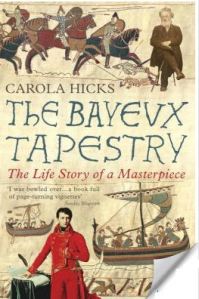 The Bayeux Tapestry: The Life Story of a Masterpiece by Carola Hicks
I got this as an ebook when looking for another book on the Embroidery recommended by Hazel Uzzell. I got what she recommended, but I want to recommend this one! It was fascinating and well written, and I will be looking at other appropriate books by Hicks!
(Why do I always say Bayeux Embroidery while everyone else says Bayeux Tapestry? Two simple reasons. First, it is more correct; second of all, in 2008 I wrote Dr. Desiree Koslin a question on the pricking and pouncing technique which she had cited in an article: “Turning Time in the Bayeux Tapestry,” Textile and Text, xiii, 1990, pp. 28-45. For her gracious answer, I asked what I could do for her. She replied that she would love it if I only referred to the Bayeux Embroidery, and I have done so ever since! Hicks by the way does not say why the title changed from Broderie de Bayeaux but does note that it happened in the eighteenth century.)
After an extensive chapter on the battle that inspired the Embroidery, Hicks comments at length on the reasons for the Embroidery, who originated the idea, who designed it and who did the actual embroidery, along with remarks on feminism connected to the process. There is even a very good chapter on the way in which embroideries—and therefore this was one—was done, going from design, transfer of the original artwork, manufacture of the raw materials and so forth. Fascinating for persons interested in medieval textiles even if they have little interest in this particular embroidery.
At this point, the book features a largely chronological account of the history of the Embroidery. The first few centuries of the Embroidery’s existence are ambiguous. To a great extent, we do not know whether it was a gift, to whom it was a gift, whether it was given from the start of the Bayeux Cathedral and so forth. We know that the Embroidery was kept in a cedar chest in the cathedral and brought out for display for only one or two occasions each year. It is first mentioned in the fifteenth century, and its amazing series of adventures begin.
Hicks compares it to a cat with nine lives, and its romantic and unbelievable exploits are more exciting than the best fiction. We are told of its travels, of its exploit with Napoleon and Hitler (both of whom wanted to use it as a symbol of the successful invasion of Britain), of its almost as dangerous encounters with people refurbishing it and its possession by one entity or another. We are told of its close escape in WWII, when Hitler sent SS men to bring it back to Berlin when Paris—to which it had brought—was in danger of falling, but a quick-thinking official was able to stymie the SS officers who never came back. And we are told of its various travels about the countryside that should have brought about its destruction. Hicks wonders if the fact that it survived was because of how it was made. Although made with a stitch used for gold threads, it is merely wool and so beneath the interest of looters looking for gold. While this is probably true, it does not deal with its other close escapes and redemptions. The Embroidery has had a dozen guardian angels or many many admirers who have worked to ensure its continued existence!
Hicks deals with the reproductions—embroidery, sketches and photography—made over the years, including the seminal reproduction by Charles Stothard. Not only was the cover not accurate in many instances—the Embroidery was considered a primitive piece of artwork compared to current Renaissance standards, and he seems to have prettied up things a little, showing shadows and the such as he deemed fit—but Stothard did other questionable things, such as clipping off one of two pieces of the ragged ends (an act which was later attributed to his wife in what might have been an effort to keep his reputation intact) and an attempt to make a plastic cast of the Embroidery by forming a mold by pressing hot wax against the fabric. His errors were in many cases continued into the actual Embroidery itself; for example, the arrow in the eye incident that allegedly slew Harold was supposed to have originally been a spear over the character’s head but which was shortened, its trajectory altered and fletching being put on the end by Stothard.
We are told of the reproductions and artistic efforts inspired by the Embroidery, and we are told at length of the best-known reproduction, the successful efforts of a group of English women from Leeks to embroider a copy of the embroidery—with breeches on the figures that assault moral virtue. They used naturally dyed wool rather than the chemical-dyed stuff used earlier to repair the actual embroidery, and as a result their effort is still vibrant today. The replica was toured—including apparently a visit to the United States—but never made the expected large profit, and was sold to the city of Reading, where it is on display yet today in a museum built especially to house it.
Graphic reproductions of the Embroidery—of various accuracy—are included in many cases, and we are told of the questionable Victorian repairs, which was done not only with inadequate yarn but with inadequate knowledge, being based to a great extent on Stothard’s inadequate pen and ink reproduction. We are also told of the many photographic reproductions made, as well as the way that some of them were displayed—including affixed on a long sheet of fabric themselves—and the pains taken by many photographers as well as the damage that some photographers might have afforded by the constant rolling and unrolling of the Embroidery and by their flash bulbs.
Besides the artistic and photographic replicas and reproductions we are told about the plays, the poems, the novels and eventually the films which were based on and inspired by the Embroidery. Hicks has added immensely to what we commonly know about the Embroidery, and she does it in a lucid, comfortable and well-written manner that adds much to the understanding of the Embroidery. I cannot recommend reading this volume if you have any interest in the Embroidery itself! Well worth the time and effort!
The book is available as an ebook.
July 21, 2014 | Categories: Uncategorized | Leave a comment
The Vikings were a practical sorts and used items that were readily available at the time in an immediate area. So when someone asks, what is the most appropriate wood to be used in Viking-Age projects—and how large should the artefacts be—one must respond, whatever he could get his hands on. Truthfully, the Vikings—in fact, all the Norse and virtually anyone else from the time—would use any wood that was available and make the object as large or as small as the wood would permit.
It obviously depends on what you are trying to do. Make an exact, museum-quality reproduction means that you are trying to duplicate the size, the composition and, yes, even the laws of the original. However, making a copy of an artefact, duplicating the spirit and the lines of the original but not making an exact copy is another matter. Certainly, making a six-inch Þorr’s hammer or a five-inch belt is out of line, but there is a wriggle room when you consider the size of various artefacts that have been found!
As long as the wood is not obviously something that was not obtainable, any wood used should be acceptable. After all, it is known that at the beginning of the Viking Age, drakkars were being constructed of oak, but several centauries later when oak was not as easily available, ships were made from pine, which was more readily available. Extant objects have been found to be constructed out of more than a single wood. This, I think, indicates that more than anything else, that making all of an artefact only of the one wood would be inappropriate unless you were making an extract museum-quality reproduction.
We do have a list of woods that were obtainable—and woods that were seen in extant artefacts—in the December 2011 installment of The Anglo-Scandinavian Chronicle. //
July 15, 2014 | Categories: Uncategorized | Leave a comment
Blame Thomas Langenfeld. His exhaustive files of provenance for his RevWar unit, Simcoe’s First American Ranger, inspired me when I joined Regia Anglorum. I began to assemble what I called my Book of Provenance, a collection of illustrations of and writings on artefacts. They are documented (now), and they are divided into several handy folders.
It was first created about ten years ago, and it has steadily gotten larger, hopefully more complete and—needless to say—has changed. I originally printed out copies, but I have not done that for at least nine years. Takes up too much storage space and besides, I have totally embraced the digital age! I have separated it into two general folders: Subjects and Book_of_Provenance.
Subjects is a collection of articles about artefacts, culture and life styles. They are taken from various sources, and if they are not pdfs, I have included all pertinent information: Author, date published (or revised), the url at which it was found and so forth. Subjects includes illustrations but only as part of the text, although line illustrations of the artefacts are included in a subfolder of their own, The entries in Book_of_Provenance contains photographs of the artefacts, along with what it is, where it was found and the date. Sometimes, there is too much information—for example, in the pages find on museum pages which sometimes give dimensions, anecdotes about the discovery and the museum’s call number, among other information—and complementary pages are placed in the Subjects folder.
A Subjects subfolder contains illustrations of modern reproductions, but only of the reproduced artefact and not of reenactors, their kit and their encampments—downloads and original photo files of these are kept elsewhere!
Early on, I did not keep suitable provenance for each artefact, and had only one photo of each artefact. Then I started archiving more photos, and I made certain that the captions were more complete. I probably have duplicates—and I continually revise placement, location and names of the files—but generally have minimal difficulty finding what I want when the subject/illustration/artefact comes up. The whole archive is in a continual state of change, so I do not delude myself that any alterations of things already archived will never happen! Sometimes, I even come up with a more useful title for the file!
In the early days, I only archived artefacts from the Viking Age—793 to 1066, using the conservative dating I used then—but early on I began to include items from an earlier time. After all, there was a tendency to use items from an earlier time: Roman artefacts were used and repurposed, and later pre-period artefacts were used as well. As Katharine Holman notes, they “are unlikely to have thrown useful objects away.” Micel Folcland have a standard rule that at an event, the person can—with the AO’s permission—use one item from another time or a different class, so the inclusion of earlier artefacts makes a certain amount of sense! Especially with the discovery of the Staffordshire Hoard—the largest hoard f Anglo-Saxon gold ever found, dating from the seventh or eighth centuries—photos and other information from Wulfheodenas—a not-for-profit reenacting organization devoted to “Recreating the Warrior and Meadhall culture of the 6th & 7th Century Northern World”—melting glaciers and more, there has been a great deal of information available from that time in addition to the discoveries made from the Viking Age. Excluding these sources seems a little short-sighted! In all these cases, I make certain they are labeled “pre-period” or the actual era, so that folc accessing the information are not even tempted to accumulate a majority of non-period kit!
Then, more recently, I began to include post-period artefacts. Obviously the intent is to let folc know what they cannot use (unless the AO determines that something might have been used before the appearance cited). Just as obviously, they are captioned as post-period or the actual date. They help folc see what current kit might evolve into, avoid unnecessary similarities and avoid substituting a later period artefact for a period one.
Having pre-, post- and current-period artefacts make me consider a new chart for inclusion in Subjects, similar to the shoe chart shown in Mould, Carlisle and Cameron’s The Archaeology of York 17/16: Leather and Leatherworking in Anglo-Scandinavian and Medieval York, but that is still in the future!
I might note in addition that the time period for current-period artefacts has changed somewhat. It is now routinely 750 to 1100 ce, so that it includes not only artefacts from the first supposed Norse interaction with Britain—possibly 785 in Portland, although non-violent trading expeditions might have predated even that—as well as the Bayeux Embroidery (the 1070s, possibly 1077), a vital source of everyday life of the time!
July 7, 2014 | Categories: Uncategorized | Leave a comment
More wit, wisdom and philosophy from literary works of the Viking Age:
Faþer vár es ert a himnom, verði nafn þitt hæilagt
Til kome ríke þitt, værði vili þin
sva a iarðu sem í himnum.
Gef oss ok hværn dag brauð vort dagligt
Ok fyr gefþu oss synþer órar,
sem vér fyr gefom þeim er viþ oss hafa misgert
Leiðd oss eigi í freistni, heldr leys þv oss fra illo.
The Lord’s Prayer (in Old Norse)
Now I command you, my beloved warrior,
that you tell this vision to men,
reveal in words that it is the tree of glory,
on which Almighty God suffered
for mankind’s many sins.
From Dream of the Holy Rood (tr. Rambaran-Olm)
May the beasts on earth be healed, they are vex in health; in the name of the God the Father and the Son and the Holy Spirit let the Devil be expelled through the imposition of our hands; who shall separate us from the love of Christ; through the invocation of all your saints through him who lives and reigns forever. Amen.
Prayer for a Sick Animal
The foolish man
thinks he will live forever
if he avoids battle;
but old age gives
him no peace,
though spears might spare him.
Verse 16 of The Havamal (tr. Ball)
There are more things to be thought of by men than money alone.
From chapter 47 of The Saga of Grettir the Strong (tr. Morris)
He who is never silent
speaks plenty
of meaningless words;
the fast-talking tongue,
unless it have controllers,
often sings itself harm.
Verse 29 of The Havamal (tr. Ball)
Facing Death, that fateful journey,
no man can be wiser that he
who reflects, while breath yet remains,
on whether his life brought others happiness,
since his soul may yet win delight’s way
after his death-day.
Bede’s Death Song (tr. Michael R. Burch)
Where fault can be found, the good is ignored.
chapter 139 of The Saga of Burnt Njal (tr. DaSent)
By their clothing, their gold armlets,
You see they are the King’s friends
They bear red cloaks, stained shields,
Silver-clad swords, ringed mail coats
Gilded sword-belts, engraved helmets
Rings on their arms, as Harald gave them.
Porbjorn Hornklofi
Hottest is the fire that lies on oneself.
From chapter 59 of The Saga of Grettir the Strong (tr. Morris)
One of the horsemen said, “Is Earl Toste in this army?”
The earl answered, “It is not to be denied that ye will find him here.”
The horseman says, “Thy brother, King Harald, sends thee salutation, with the message that thou shalt have the whole of Northumberland; and rather than thou shouldst not submit to him, he will give thee the third part of his kingdom to rule over along with himself.”
The earl replies, “If I accept of this offer, what will he give King Harald Sigurdson for his trouble?”
The horseman replied, “He has also spoken of this; and will give him seven feet of English ground, or as much more as he may be taller than other men.”
From Part 2, Chapter 94 of Heimskringla, Saga of Harold Hardrada (tr. Laing)
Shepherd: I have much work to do. As soon as it is light, I drive the ewes to the pastures and guard them with dogs through heat and cold, so that the wolves do not devour them. I drive them to the folds, where I milk them twice a day. I move their folds and I make butter and cheese as well, and I am faithful to my lord.
Ælric, Colloquy (tr. Watkins)
Show courage and bravery in battle; fight with proper and effective blows, such as you have already learned, as if in the best of humor, though filled with noble wrath. Never fight with feigned strokes, needless thrusts, or uncertain shots like a frightened man. Heed these things well that you may be able to match your opponent’s skill in fighting. Be resolute in combat but not hot-headed and least of all boastful. Always re- member that there may be those who can give good testimony in your behalf: but never praise your own deeds.
from page 214 of The King’s Mirror (tr. Larson)
(With thanks from Regia mates: Hrolf Douglasson, Gary Golding, Rich Price, Kim Siddorn, Ali Vikingr and Paula Lofting Wilcox)
June 30, 2014 | Categories: Uncategorized | Leave a comment
“Anything worth doing is worth doing right.” Since childhood, how many times have we heard this? It is just as relevant in living history today. This is for all reenactors, not just Viking Age reenactors! At the end of the test, add up the points (or have a friend add them up for you…) and check your score!
When I sew a costume, I
Make what looks good. 0 points
Glance at a web page, especially Wikipedia. 1 point
Make modifications to a researched design. 2 points
Do extensive research and duplicate it exactly. 4 points
Wear whatever my SO puts on me. 0 point
At events, I camp in
A nylon pop-tent. 0 points
A canvas tent using polyester ropes. 2 points
A canvas tent using natural ropes. 3 points
A flax or hemp linen or wool canvas tent that I wove, with sealskin ropes. 4 points
Camp? Spewww! 2 points
At events, My camp or day camp is filled with
My dad’s camping equipment. 0 points
A matching set of nylon camp chairs (mmmm, comfortable). 0 points
Most of my equipment is documented or at least primitive. 2 points
Equipment that is documented or at least primitive. 3 points
Only furniture and equipment that I can document. 4 points
At events, I wear
Funky Elton John sunglasses, maybe in my prescription. 0 points
Whatever sunglasses or spectacles I regularly use. 0 points
I never notice spectacles at all; I don’t know. 0 points
Nondescript glasses that don’t detract from my impression. 3 points
Period accurate spectacles or none at all. 4 points
At events, I speak
Like the Lucky Charms Leprechaun, Yosemite Sam or the Quaker Oats dude.. 0 points
Forsoothly. 0 points
Like a normal modern person, maybe sprinkling in some period idiom. 2 points
More formally than in modern life, maybe sprinkling in some period idiom. 3 points
In the proper language and dialect. 4 points
At events, I like to listen to
Stuff on my IPOD. 0 points
Stuff on my boom box. 0 points
Accurate Period Music on my boom box. 2 points
Accurate Period music on modern instruments. 3 points
Accurate period music on appropriate period instruments. 4 points
At events, I eat
Wing Dings and Snicker Doodles I got at that last gas station. 0 points
Whatever is available on site. 1 point
Modern foods cooked in a modern manner. 1 points
Accurate period foods cooked on my range at home. 3 points
Accurate period foods cooked in a period manner with period utensils. 4 points
At events, I like to talk about
Things I do in my modern life. 0 points
Things I do, whether they are historical or modern. 0 points
Things I do that relate to The Hobby. 2 points
Things I do that are historical. 3 points
Only period matters. 4 points
At events, I think cell phones
Ought to be used without anyone raising any eyebrows. 0 points
Ought to be used only for important matters. 1 point
Ought to be kept out of sight unless needed. 2 points
Ought to be kept out of sight and used only for emergencies. 3 points
Ought to be turned off and left in the car if not at home. 4 points
At events, tattoos and piercings
Are proudly displayed. Isn’t Taz with a horned helmet cool? 0 points
Are irrelevant. 0 points
Are hidden unless that is difficult. 2 points
Are hidden unless documentable. 4 points
I don’t have any. 2 points
I think cameras
Are a kick. How will anyone believe this otherwise? 0 points
Ought to be carried by everyone. 1 point
Ought to be hidden until they are used. 2 points
Ought to be hidden and brought out to be used only when no civilians are around. 3 points
Ought never to be used by costumed reenactors unless they are period appropriate and then only when the mechanism is period. 4 points
I prefer to portray
Any class whose clothing looks glitzy on me. 0 points
Exceptional high-class characters. 1 point
Famous characters. 1 point
Famous or important characters only when appropriate. 2 points
Ordinary everyday characters. 4 points
Living history is
Often too much like high school history classes. 0 points
An excuse to wear funny clothing, drink beer and get laid. 0 pointsA romantic lark. 1 point
A chance to kick back, relax and forget the modern world. 2 points
A mandate to educate spectators, participants and yourself. 4 points
Authenticists are
Repressed sexless Nazis with no senses of humor. 0 points
Misguided. 1 point
Sometimes nice folk if you don’t talk about living history. 2 points
Valuable if they keep their ideas to themselves unless I ask about them. 3 points
Essential to the integrity of The Hobby. 4 points
Documentation is
Irrelevant. 0 points
Okay if it’s not inconvenient. 0 points
Can be disregarded if the end result is uncomfortable. 1 point
Important. 3 points
Essential. 4 points
Scoring
0-5 Farby–You probably like to wear funny costumes, get drunk and have senseless fun. We’re not certain why you’re in reenactment, but remember that there is always a chance to improve!
6–14 Below Average–Although you like history—or at least the fantasy in history—but you’re not going to let that or any obligation to educate stand in the way of a good time!
15–26 Average–You like history, but you don’t think accurate historical representation is important enough for inconvenience or discomfort. You’ll be accurate if it’s not too difficult.
27–45 Excellent–You honor and respect history and want to make a very good presentation.
45–60 Old school…real old. You may stop at pulling out your modern dental filling. May…
June 23, 2014 | Categories: Uncategorized | 1 Comment
For years, I tried to “lead by example.” This is a euphemism for making certain your kit is top flight and encourage everyone else to make theirs better as well. But you know, in that “historic” organization, there might have been one or two who spiffed things up—and were outrageously proud of their improvement, but not enough to get out of the organization—but there were many many more who dug in their heels and de-spiffed because, as my wife noted, they felt threatened or insulted. Many indignantly rationalized their farb by saying that they needed it, that it was comfortable, that other people did it.
I was in that organization since 1972. In 1984, I published a book on its failures after talking with friends and reading Professor Anderson’s seminal volume on serious living history and realizing where it failed. My standards had increased. In 1989, I got into AWI living history, and it opened a whole new curtain. From then on out, my perspective was greatly different. In the pre-Internet early 1990s, I tried and failed to form a more accuracy-focused living history group that covered some of what that original organization covered. After a health crisis, I cut down on activities, concentrating on an effort where I thought I could make a difference. It didn’t and, afterwards, someone came up and thanked me for taking over the job until they could find someone else to do it. The fact that I did it for three years made it sort of an extended “filling in” but that seemed not to penetrate his conscious.
After that, I started looking around for a serious living history group that covered the era. At that time, a lot of top-notch foreign groups were expanding into the States, including one that I had belonged to briefly in the mid-70s (but that floundered from lack of interest) as well as Regia Anglorum, which started in 1986. I had considered joining an independent Stateside group but was warned that it was going to wink away; sure enough, it did. Then I ran into a Regia encampment at Gulf Wars. I fell in love immediately. Everything that I had learned in AWI living history was being duplicated. That started me on my current thrust.
I was surprised at how much that original group came to grate on my nerves. Members patted their backs and repeated nonsense. The organization’s emphasis of bureaucracy over accuracy—which I had long complained about—became paramount. A long-time and high-ranking member chided me for wanting history, noting that the only reason that the group even mentioned “history” was because the federal government wanted to give it a tax write-off. A member of the group publicly said that he hoped I died a painful death because of something I said about accuracy. A high-ranking member of that group very conspicuously insulted me and ignored my contributions while leading by example. Several members asked for information, which I freely gave and for which they never thanked me or even acknowledged the receipt of the information. And the straw that broke the camel’s back, a new officer doing a job I had done for thirty years and for which I got a university degree, told me to step aside and let her handle it; when I asked her what qualifications she had, she returned, “I don’t have to tell you. That’s my job.”
There are no attempts, not even a desire to make things uniformly accurate and to tighten up the nonexistant accuracy regulations. The idea of hours or areas to be accurate is totally beyond most members, and many times, members recruited from that organization must go through length “re-programming.” Many see the organization as a bush league, to seduce new members, but they ignore the fact that continued membership becomes either a romantic ideal, a family or a reason for driving people away from medieval reenacting altogether
I am amused and puzzled by the “freckles” in that group. That comes from my observation if good living history is a tan, then that organization is freckles. There are spots of sheer genius, things that impress friends from Regia, but they are content to ignore the white spaces between those freckles. Cynicism leads me to believe that their accuracy might help them stand out in a farby organization while they’d just be part of the crowd in a serious organization, but that is cynicism. I’m certain there are other reasons for clinging to the group even if I cannot see them.
Yes, that organization has more members. If quantity is more important than quality, then it rings the bell. At an early meeting, our group announced that we wanted quality over quantity, and we have turned away a number of potential members who though that we’d lower standards to gain their membership.
I still have friends in that organization. I have many more who have left for one reason or another. A good many do other eras of time in serious living history because that organization has spoiled most people’s perception of medieval reenacting that organization even likes to use the name of the organization to mean “medieval.” But when people from other eras see the work we do to create a consistently accurate image, they are impressed and have complimented me on it. They prefer the quality to the quantity, and coming from people I respect and admire, that makes me more than happy!
June 16, 2014 | Categories: Uncategorized | Leave a comment
I have alluded before to my belief that Experimental Archaeology and Living History are similar—often complementary—but separate pursuits. Let’s look a little bit closer at the two pursuits.
Experimental Archaeology “attempts to generate and test archaeological hypotheses, usually by replicating or approximating and the feasibility of ancient cultures performing various tasks or feats”
Living History is creating an illusion in which “people to simulate life in another time.”
In the one, we are doing things in the way that they were done in the past. In the other, we are displaying to the public the results of those labor or displaying how it was. In that last case, we might be combining the two pursuits, but that is not necessary. In the first case, you can wear what you want; in the second, you can use an accurate replica made with power tools. Or you can demonstrate a procedure for MoPs—or to fellow reenactors at BUFU events—using period tools and technology.
For some people doing living-history, experimental archaeology is essential to the experience. They are trying to duplicate the feelings and technologies of the past so they can better appreciate living in the past, and all I know, period clothing might be essential for some experimental archaeologists as well. After all, they cannot know the restrictions on and limitations of movement unless they are wearing the clothing from the time!
In the end, experimental archaeology is in many minds, just a version of plain archaeology, while living history—because of many practitioners—is not considered to be a valid pursuit at all. As a practitioner and adherent of living history, you can well imagine that my interpretation is somewhat different!
June 9, 2014 | Categories: Uncategorized | Leave a comment
Most serious living-history groups are always looking for new members, but they are not organizations for everyone. Below, we have a dozen statements that will honestly ascertain whether you would be interested in serious living histrory. If you disagree with many or most of them, then you would happier participating in a less exacting living-history organization, in a loose fancy dress party with titles, in a fantasy-based LARP or perhaps in no such organization at all. However, if you agree with most or all of these statements, you might very well enjoy what you’d be getting yourself in for!
1
I am interested in history
2
I think history is fun
3
I am interested in having fun not only while learning but because I’m learning
4
I am interested in recreating history as accurately as possible, surrounded by friends who share my standards
5
I want to explore the past because it’s interesting, not because of a possible award or title or because I want to look more accurate or more posh than anyone else in the organization
6
I am willing to share what I know I find out and to help fel-low members achieve the same level of skill I have attained
7
I am willing to obey the dictates of an Authenticity Officer
8
I am interested in dealing with the public
9
I can operate without modern spectacles (contacts are allowed), sunglasses, sneakers, sun hats, parasols and other modern conveniences if they were not used in the period the organization recreates
10
I am interested in the geographic area and culture that the organization recreates
11
I am interested in the arts and crafts of the culture that the organization recreates
12
I am interested in the everyday life of the culture that the organization recreates
June 3, 2014 | Categories: Uncategorized | Leave a comment
Wit, wisdom and philosophy from literary works of the Viking Age:
Fæder ure þu þe eart on heofonum; / Si þin nama gehalgod / to becume þin rice / gewurþe ðin willa / on eorðan swa swa on heofonum. / urne gedæghwamlican hlaf syle us todæg / and forgyf us ure gyltas / swa swa we forgyfað urum gyltendum / and ne gelæd þu us on costnunge / ac alys us of yfele soþlice
The Lords Prayer in Old English
“The temples of the idols in that nation ought not to be destroyed; but let the idols that are in them be destroyed; let holy water be made and sprinkled in the said temples, let altars be erected, and relics placed. For if those temples are well built, it is requisite that they be converted from the worship of devils to the service of the true God …. And because they have been used to slaughter many oxen in the sacrifices to devils, some solemnity must be exchanged for them on this account…. but kill cattle to the praise of God…. For there is no doubt that it is impossible to efface everything at once from their obdurate minds; because he who endeavours to ascend to the highest place, rises by degrees or steps, and not by leaps.”
Pope Gregory in a Letter to Mellitis, quoted in Bede’s Historia ecclesiastica gentis Anglorum (tr. Holder)
Sense is needed / for the one who travels widely; / everything is easy at home. / He who knows nothing / and sits with wise men / becomes a mockery.
Verse 6 of The Havamal (tr. Ball)
Then he goes to Gizur and his band as they sat on the ground. Gizur looked at him and said, “Well, is Gunnar at home?”
“Find that out for yourselves,” said Thorgrim; “but this I am sure of, that his bill is at home,” and with that he fell down dead.
From Chapter 76 of The Saga of Burn Njal (tr. DaSent)
Verily you must know that to be called a king’s housecarle is not to be despised as a title of derision ; but it is a name of great honor to everyone who bears it. For neither^ landedmen nor hirdmen, though because of some infirmity or because they are tired of warfare they prefer to cultivate an estate in the country, are willing to surrender the housecarle name because of its honor and security.
from page 175 of The King’s Mirror (tr. Larson)
We are concerned about the way we speak, as we want to speak correctly and with meaning, and not with meaningless base words. Would you beat us and make us learn? For it is better for us to be beaten to learn than to remain ignorant. However, we know that you are a kind-hearted man who would not wish to inflict blows on us unless we ask for them.
Ælric, Colloquy (tr. Watkins)
Ale is not as good / as it is said to be good / for the sons of men; / because the man knows less / —he who drinks more— / of his disposition.
Verse 12 of The Havamal (tr. Ball)
(With thanks from Regia mates: Hrolf Douglasson, Gary Golding, Rich Price, Kim Siddorn, Ali Vikingr and Paula Lofting Wilcox
…and even Mike Everest 🙂 )
May 28, 2014 | Categories: Uncategorized | Leave a comment
Continuing my review of True Myth: Black Vikings of The Middle Ages by Nashid Al-Amin
It is Al-Amin’s theory that Northern Europe was settled by a black race and that the black races were still in dominance in Scandinavia during the Viking Age. He backs up that assertion by factual, but his theory is frustratingly both very thought-provoking and highly jingoistic.
This is not a perfect book. Al-Amin reiterates many theories that are out of the mainstream that are close to my own. I do not agree with all his theories, but my agreement with many disposes me to give unknown or new ones a fairer chance.
The facts cited are not generally mentioned or noted, but which were to me fairly familiar. After all, in high school, I had scandalized a teacher in biology by stating that black people were probably predecessor to the whiter races that developed later. References to Grimaldis and other physical proofs, along with some very convincing illustrations, literary accounts and ver ambiguous academic observations are very convincing and provide a suitable foundation for the entire subject.
Although the book has some very persuasive illustrations—a photo of Otzi the Iceman clearly showing African features that are usually ignored—a lot of the is largely contrary to what the reader might think. Still, an impartial reader will find it easy to give credence to more controversial assertions and interpretations.
The book has awakened an interest in the matter. And I have seen now a lot more references to dark-skinned people of the area and time. The book contains many radical, inspirational and legitimate reinterpretations.
I’ll be frank. After reading the book, I don’t know what to believe.. On the one hand, I cannot unthinkingly and enthusiastically embrace the concept, but on the other hand, Al-Amin has painted a scenario which cannot be unthinkably denied or ignored. In the end, I have to file Al-Amin with John Bosworth, a revisionist—and I know that some revisionist history a little below camphor stew—who can look at what has been generally said and believed an see a new interpretation.
In the end, I readily see how some Norse were dark complectioned—though they seemed to have valued light skin and blond hair if we look at how they attempted to artificially promote this—though I cannot believe without reservation that they all had black African features. The end result was probably somewhere in between. As adamantly Afro-centric as many authors are Euro-centric, Al-Amin and the book are not without their faults. And the truth probably lies somewhere in the middle. I agreed already with much of what he says. And I cannot agree with is the notion that all Norse were pure, white Aryan images! But this is another reason I want to fund a frozen Norse Otzi from the Viking era!
For purchasing a copy of the book—both physically printed and an e-book—see this site.
May 20, 2014 | Categories: Uncategorized | Leave a comment
Continuing my review of True Myth: Black Vikings of The Middle Ages by Nashid Al-Amin
It is Al-Amin’s theory that Northern Europe was settled by a black race and that the black races were still in dominance in Scandinavia during the Viking Age. He backs up that assertion by factual, but his theory is frustratingly both very thought-provoking and highly jingoistic. The book cannot be accepted as unvarnished truth. Whether these points has any influence upon the validity of Al-Amin’s interpretation is another matter, but they must be stated.
His constant (justified) attacks on Christianity followed by his protests that he is not being antiChristian reminded me of all those racists who will make statements about the watermelon-eating commnyist tearing apart the Constitution and then piously assert “But Ah ain’t no racist…” Not racism here but an obvious prejudice against faith.
The title and supposed theme are to a great deal simply come ons. However, for Al-Amin, it is more of a hook upon which to hang his racial theories. Whites can do no right. Blacks can do no wrong. Although he condemns Christian imperialism, he either ignores or praises Muslim.
He often thinks with a modern ideals and suppositions and tastes.
The persistent use of phrases such as “the thirteenth century (i.e., the 1200s)” and a tendency in many cases to say “perhaps more conjectural than factual” aside, Al-Amin writes often with a witty and ironic voice—not to say understated since he is often screaming his message. A strange excursion into films that seems more concerned with racial politics than with the history depicted in the film. For example, he is concerned with “The Norseman” and ” The Long Ships” but more so with racial portrayals in “King Kong” and “Star Wars.”
Some of the worst writing—simple errors about the culture and not mentioning possible items—is jarring. Al-Amin ignores items that go against his theories. The Bayeux Embroider, which theoretically shows the faces of character and is all white. Is not mentioned ( on the other hand the embroidery can be used to justify purple horses). He loves to cite art when it supports his theories but is just as likely to ignore them if they contradict them. He has a tendency to state interpretations as if they were cold facts, so you have to read this with a skepticism and not just accept things. But in many instances, this becomes a matter of over-preaching and spreading the concept a bit too thick.
The book is a bit labyrinthian and erratic, and Al-Amin states and restates many of the same points over and over again, as if repeating something many times will make it true. One gets the feeling that this book contains enough information for a decent-sized paper but has been padded and repeated into a book size.
Al-Amin slings around phrases cavalierly, an indication of certainty that many reader will immediately employ as a barricade between their minds and Al-Amin’s ideas. After a while, Al-Amin ceases his polemics, and for a time the volume becomes yet another standard overview of Norse exploration, trade, raiding and creation of an empire. Still he prefers to deal with matters from an anti-Christian manner that will infuriate them as easily as the theme of the book will offend racists. He especially likes the phrase “Eurocentric” (a claim which many Eurocentric scholars will immediately deny or ignore). And he also has a preference toward popular and secondary sources, which to me is worse than using a popular phrase or stark revisionism. But he also uses primary sources, both graphic and literary, that are eye opening and provocative. To a good extent his veracity seems to be the fodder for another questionable History Channel documentary, and it does duplicate any of the methods, but it seems to have more detail and proof at its core! The book deals more with polemic ranting and logical constructs. And some of the arguments come awfully close to the specious conspiracy arguments that attempt to connect the Egyptian and the Mayan pyramid builders!
At times, the book becomes a simple recitation of facts—mostly adequate but riddled in places with errors and misinterpretations but certainly not as vivid and passionate as parts of the book that Al-Amin really cares about. Does this mean that his other interpretations are suspect? Probably. But next week, we look at some of the more positive—and convincing—points in the book.
May 13, 2014 | Categories: Uncategorized | 1 Comment


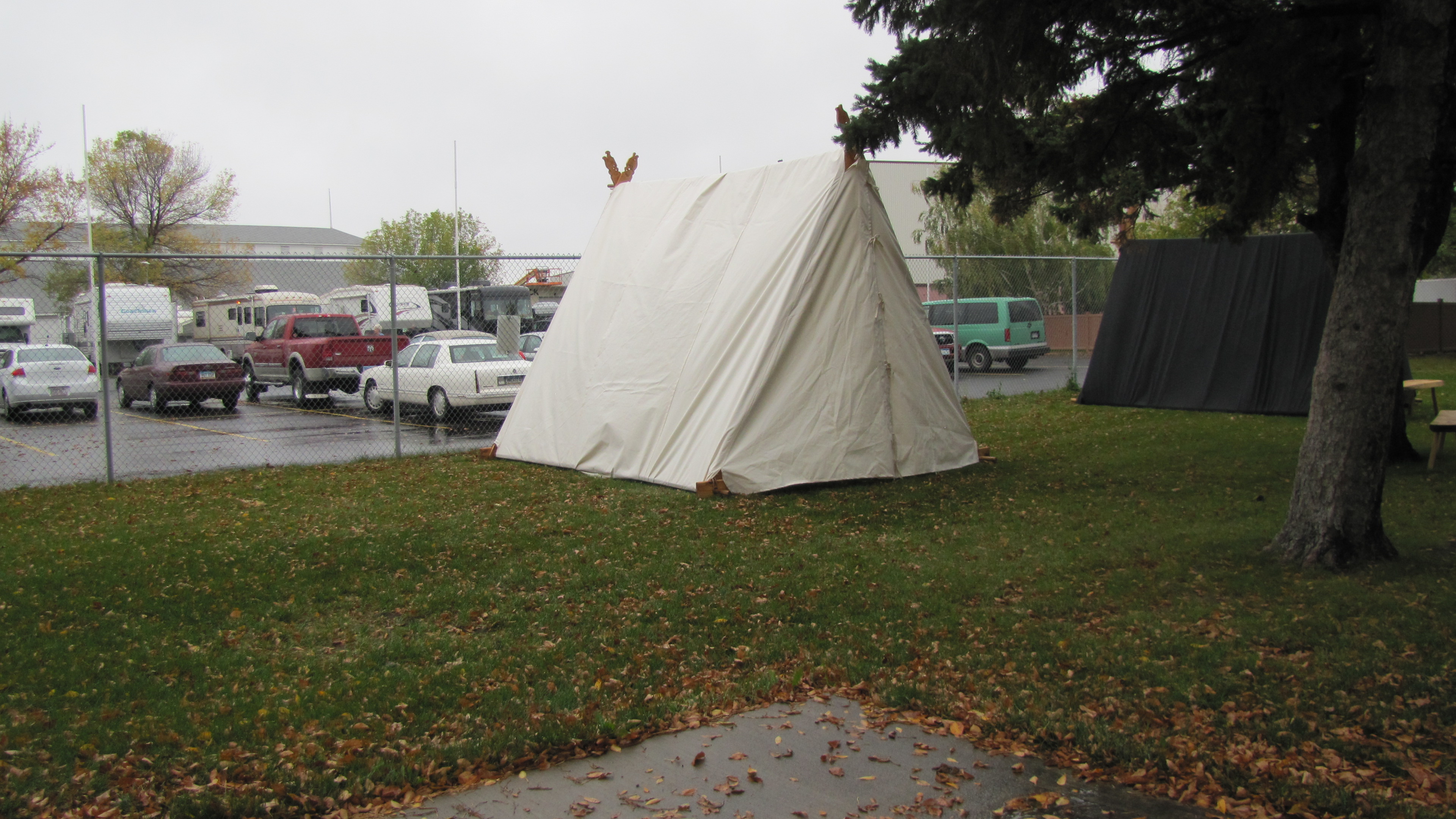


 folo1
folo1
 The Anglo-Scandinavian Chronicles
