A selection of acronyms not necessarily restricted to a single era! Feel free to contribution new an d additional acronyms!
Acronyms are everywhere nowadays, and many acronyms have vastly varying meanings. These are not necessarily universally used reenactors. But probably should be!
ACW American Civil War AO Authenticity Officer AWI American War of Independence BM British Museum CRAP Can’t Really Actually Provenance
CW
Colonial Williamsburg DA Early Middle Ages. From the discredited term “Dark Ages” ECW English Civil War LHE Living History Exhibit MA Master at Arms or Middle Ages MoP Member of the Public (a MoPpet is a young Member of the Public) MTA Military Training Officer SHITS Seriously Hideous Inauthentic Trash TAPS Thick As Pig Shit VA Viking Age or Albert and Victoria Museum VMA Viking Middle Ages
Having access to or possessing certain items is essential. Having a loom, a desk or a work table is certainly essential. However, even more essential are those minor tools that can be easily transported and used. The fabled Mästermyr tool chest is an example of a traveling artisan who certainly had to borrow—or construct—a place where these tools can be used.
The following are essential, to be certain and should work for most basic activities, but they are just a start! All these tools were chosen because they were so often seen that they were ubiquitous and small enough to be easily held and transported.
Agriculture
Axe Hoe Mallet/Mall Rake Shovel Sickle/Scythe
For a more complete list of what tools might be owned, consult the list in “The Discriminating Reeve” to choose what might be of use.
Cooking
Knife (Large) Pot (metal or Stone; a tripod or trivet is also recommended, though a temporary surface of some sort can be made with stones) Spoon (Large)
Leatherworking
Awl Cutting tool (Sharp Knife or Shears) Needle
Metalworking Tools
Hammer Tongs
Textiles
Needle Pins Shears, Scissors or Snips Spindle Whorl and Stick
Weapons
Spear
Woodworking Tools
Axe Hammer (a Mall type, not a specialist hammer) Tongs (also known as Pliers) Wedge (metal or wood)
I have recounted above the basic tools needed for those activities with which I am accustomed. If there is an activity with which you are familiar that is not mentioned here (or a tool for one of these activities you find essential but mentioned here), please let me know!
Monastic sign language has been used in Europe from at least the tenth century by monks of the Benedictine Order because “silence is a virtue.” It was a method using a hand lexicon to name certain commonplace things without speaking aloud. It is not a language, per sé, like ASL, though very useful. This article was inspired by Debby Banham’s The Anglo-Saxon Monastic Sign Language.
If you would like butter or fat, stroke with your three fingers on the inside of your hand.
For living in the Viking Age, what would be the essential goods owned by a person?
I would suggest the following: Tunic and Undertunic (or dress and apron/hangeroc and underdress) Braises or stockings (unless you are warm) Some kind of socks if the braises or stockings had no sock feet Shoes Cloak A knife A bowl A cup
(unless, of course, you want to be a þrall or þraell)
Beyond that, it becomes two different matters. And even some of these—such as the shoes or the cloaks—are dependent on the weather in most instances.
Most would have a belt or sash of some sort, possibly just a length of rope or fabric If you are rich, there is no end of what someone would own. If you were literate—probably a cleric—you would have a Bible and perhaps other books relating to religious thought. Even the poorest of people—even the þralls—might have a religious pendant, a game of some sort and perhaps a souvenir, just a stone that attracted his fancy. Workmen had the necessary tools to do their trade.
The important thing is that all items owned by a person would be from the same culture and of the same cost. There might be an exception—a souvenir or gift—but here I am talking about a single item, and if the item was very expensive, the chances are that it would not be often flaunted!
But not everyone would have such an item. I might well vary from person to person according to taste and what is necessary.
What is the point of these observation? Merely this…
When you are starting reenactment, take pains that everything should be of the same class. Your first outfit might very well be rather primitive. As long as it is accurate in its composition, color and style, it does not matter how sophisticated it is. In fact, having a sophisticated piece of clothing that is cheaply done is often more comical than accurate. When you are acquiring your first set of period clothing—and all subsequent sets as well—you must carefully research and recreate. When determining what your clothing should look like, you should carefully avoid almost every film, most comic books and books by authors such as Iris Brooks, Herbert Norris and Ruth Turner Wilcox. Instead, consult such books as the various Textiles and Clothing books, Þor Ewing’s Viking Costume or Gale R. Owen-Crocker’s Dress in Anglo-Saxon England. Good luck, work hard and have a good but accurate time!
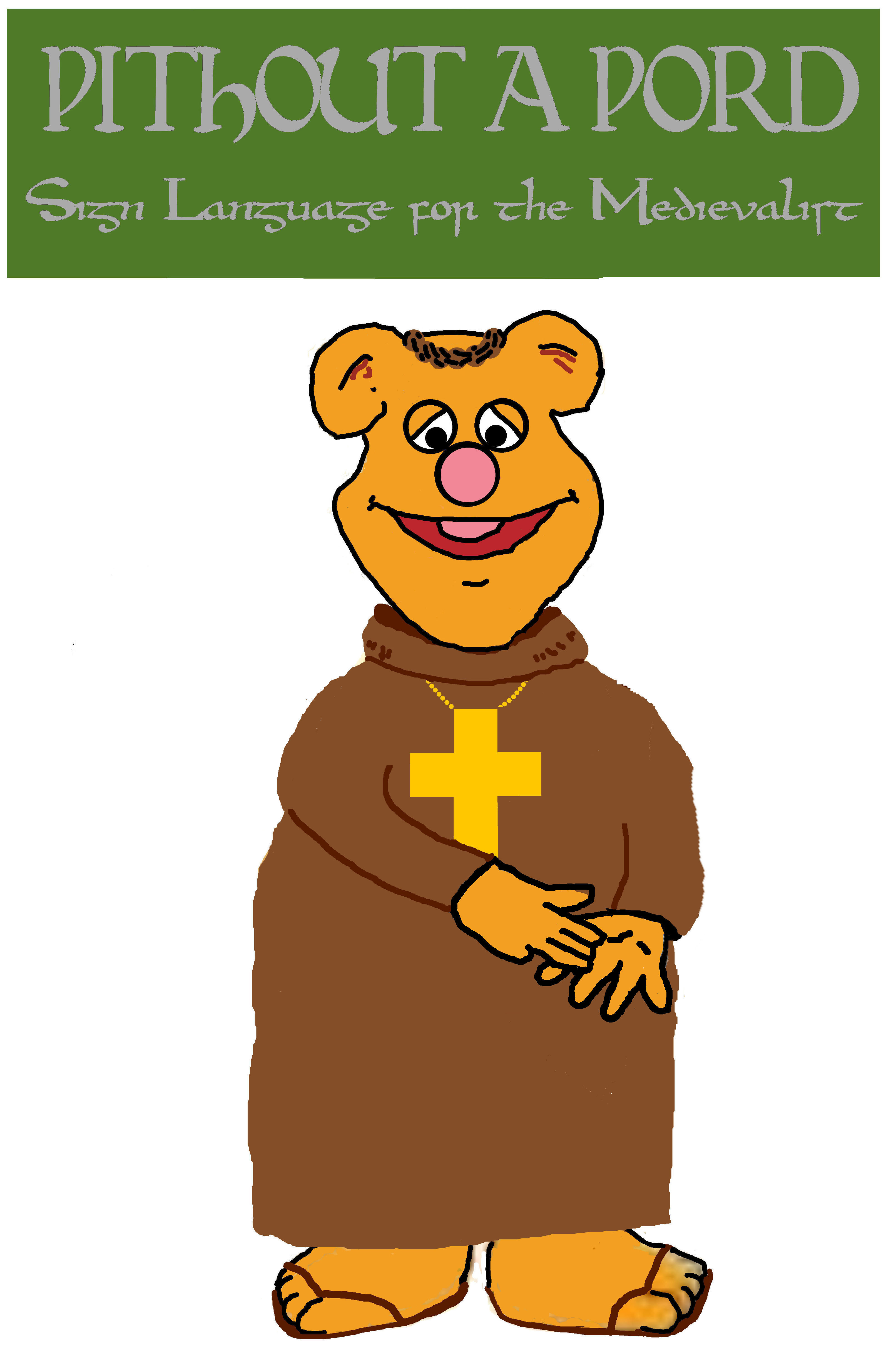
Actually give me a bible, but I just did this as a cover for the Folump catalog and really liked it!
Monastic sign language has been used in Europe from at least the tenth century by monks of the Benedictine Order because “silence is a virtue.” It was a method using a hand lexicon to name certain commonplace things without speaking aloud. It is not a language, per sé, like ASL, though very useful. This article was inspired by Debby Banham’s The Anglo-Saxon Monastic Sign Language.
If you would have a book, move your hand back and forth, raise up your thumb and set your hand flat against your chest.
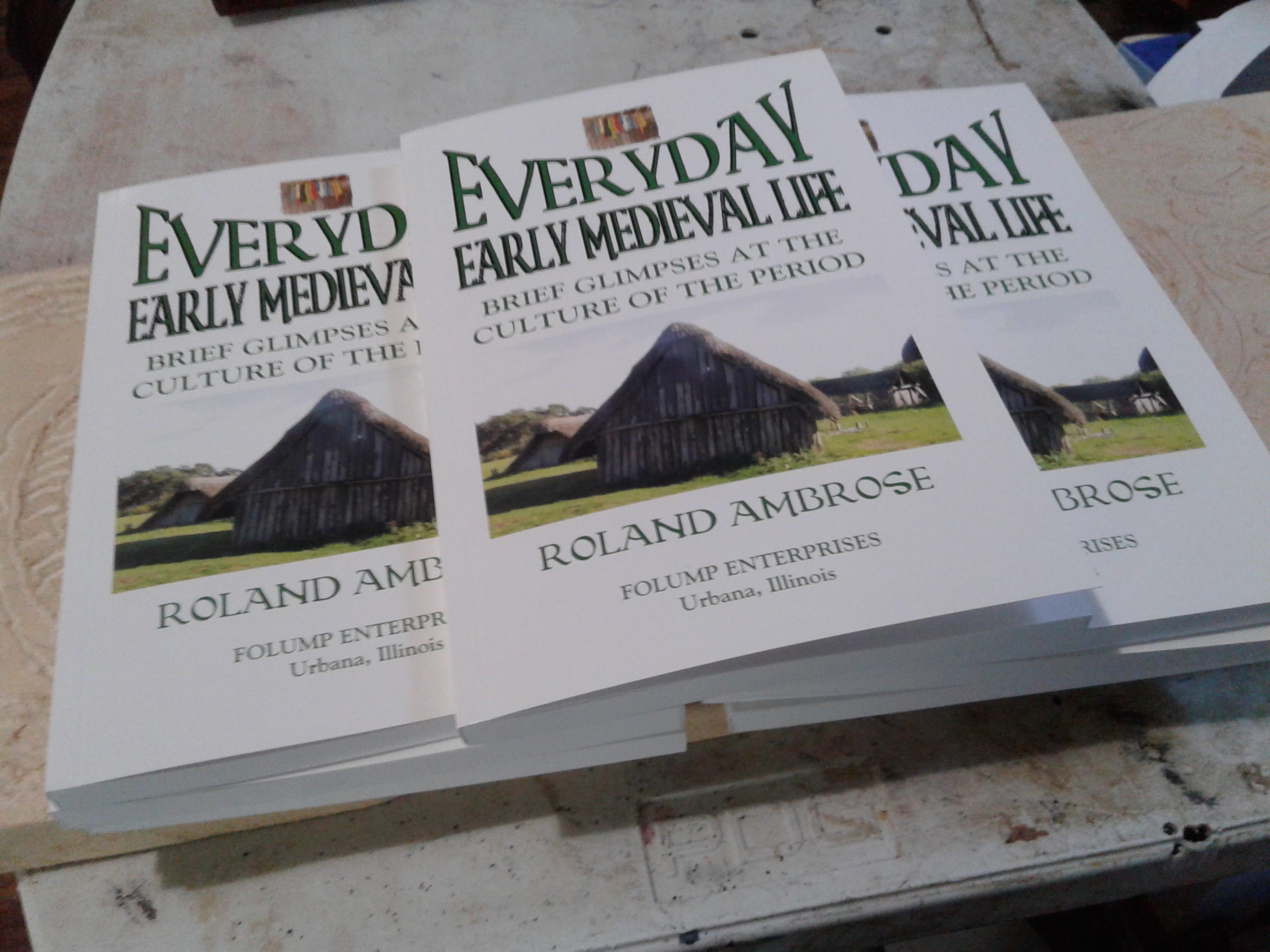
I am proud to announce the publication of a new book, Everyday Early Medieval Life. It is directed toward reenactors, though it may be of interest to non-reenactors who are interested in early medieval history. My background is modern journalism, and I have tried to back up all assertions with citations. Finding these citations was difficult, since they deal with subjects of little interest to many archaeologists, historians and so many “Combat Wombat” reenactors!
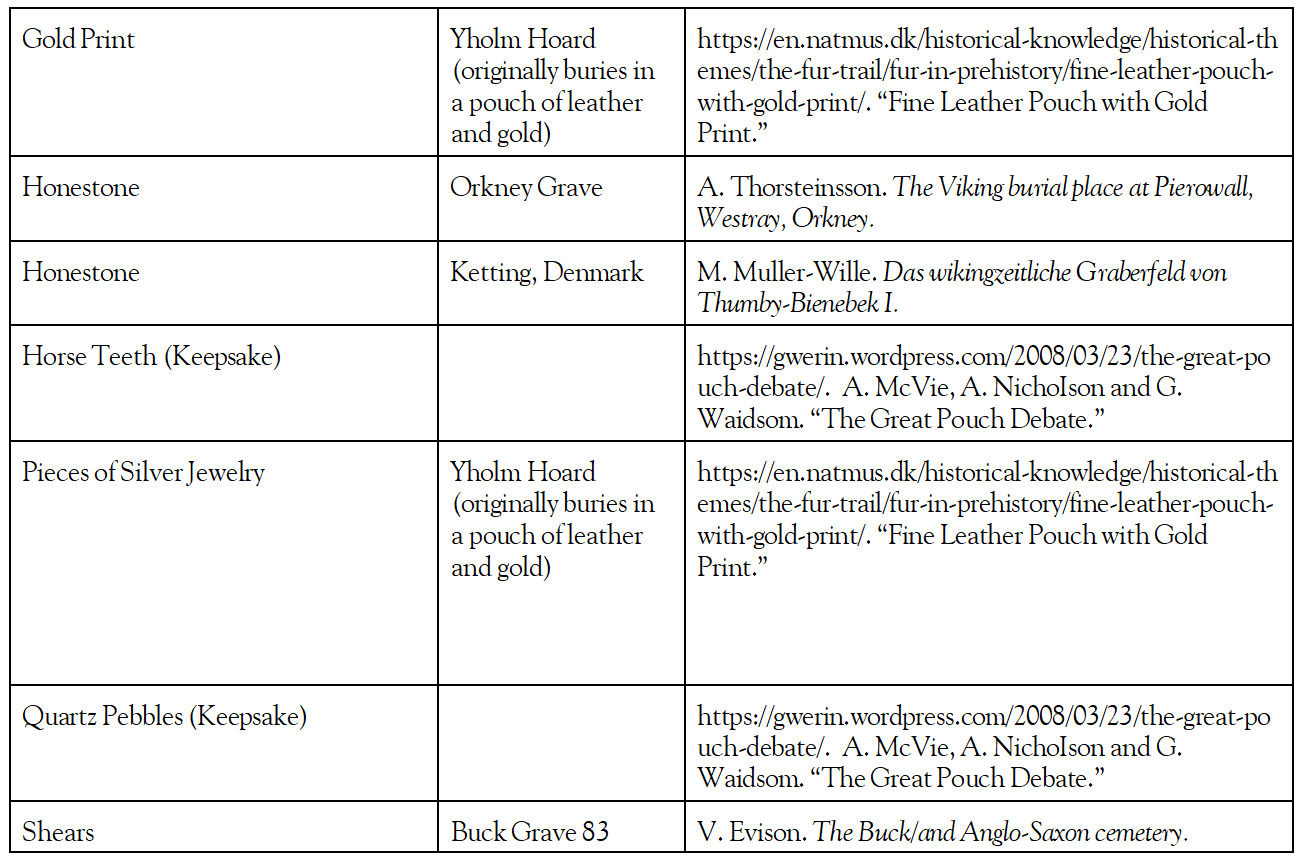
It deals with the contents of pouches, the kinds of shoes worn, accurate tentage, accurate furniture and much more, along with notes on what is generally accepted—often referred to as reenactorisms—but is farby to the extreme. Besides the citations, the book includes a bibliography, a complete table of contents, original illustrations, period illustrations, photographs of reenactment sites and photographs of period replicas from my collection. Here are a few photos of pages from the book:
Monastic sign language has been used in Europe from at least the tenth century by monks of the Benedictine Order because “silence is a virtue.” // // It was a method using a hand lexicon to name certain commonplace things without speaking aloud. It is not a language, per sé, like ASL, though very useful. This article was inspired by Debby Banham’s The Anglo-Saxon Monastic Sign Language.
If you need a knife, cut with one finger over the other as if carving.
Getting tired of reading about buffs complaining pretentiously that a vendor should be despised because the vendor is selling things that are not a hundred percent accurate and affordable.
Let’s face it, As the saying goes, good reenacting is not inexpensive. Reenacting materials can be inexpensive. And it can be accurate. But getting them both at the same time is nearly impossible unless you are dealing with previously owned materials, with gifts from friends and makers that do not want to make any sort of a profit. Having a vendor who offers moderately inexpensive and moderately accurate merchandise is, no matter what people say, legitimate as long as the vendor does not say that they are all perfect for any reenactor.
The basic thing is that any reenactor must examine all pieces of merchandise according to the accuracy requirements that he adheres to. Generally but not necessarily a society’s regs. These vary from vague and ambiguous enough to encourage new members with the least amount of work to a printed book that explains the regulations. These are taken from the Regiaanglorum authenticity manual and re copyreight Regia Anglorum. We use the terms Encouraged (common), Optional (less common), Allowable (with AO’s permission and provision) and Unacceptable. If an object is Allowable, you must consult with the AO! The opinion of the vendor should not be acceptable for the ratings of accuracy unless it includes photos of extant artefacts or legitimate provenance!
What this means is that almost no piece of kit may be worn on the line or displayed to the public without some modification! When someone complains how farby a dealer is, perhaps you should take a closer look at the situation and see why the buff dislikes the vendor!
Making modifications to insure that a piece of kit is acceptable to the authenticity regs of your society is essential to your shopping. It is necessary. Almost nothing is going to be perfect in the eyes of the buff (and keep in mind that their interpretations of accuracy might not be the same as yours). The cost and time required to make the necessary modifications must be allotted. Snarky descriptions and condescending comments on the vendor must not!
Much of the following has been taken from “The Great Pouch Debate” by A. McVie, A. NichoIson and G. Waidsom.
There are few extant pouches that have been found, and there seems to be arelustance to say what they contain–if anything remains. Andrew Nicholson noted in private conversation that, “organic survival is difficult.” “Buried Vikings: Excavating Cumwhitton’s cemetery” notes in Current Archaeology 294 that “Initially, all were X-rayed to determine their contents. Then, using the X-rays as a guide, the blocks were carefully excavated, and the objects stabilised, cleaned, and conserved as they emerged from the encasing soil,” but finding these contents is difficult! This page is not finished and may very well be added to and corrected as we received the information.
*McVie et. al. notes, “the citation does no say whether these are human or animal.”
One of the best ways to observe everyday life during the pre-Conquest England is neither through an academic book nor a general non-fiction booth nor even a history book from the time. Just as it is easiest to find people were actually doing during time by reading what they were prohibited from doing, wills, charters and other legal documents tell what the people of the time found important, valuable and coveted.
Yet, these are almost never displayed to the public, so vital way to educate them. So I decided to make a few of these documents that could be displayed. I started by researching what the wills, charters and other documents of the time said. For example, in the famous will of Wynflæd, we find out that she valued red fabric, slaves (many of whom she freed after her death) and (European) bison horns!
I found Anglo-Saxon Wills, and Anglo-Saxon Charters to be especially valuable. These books, dating from he start of the twentieth century, contain the original Latin on one page and a translation in modern English on the facing page. I’ve always loved books like this, and these are not exceptions!
I have long done what I call computerized calligraphy, where I use my typographic training to typeset replicas of hand-made calligraphy. So I was able to choose a number of documents and transferred the untranslated Latin to a document, then formatted it to look like a period document. I substituted the names found in the document for names of reenacting friends and even invented names for some of the places, just to accentuate my sense of humor. Printed out on heavy vegetable parchment, they looked nice.
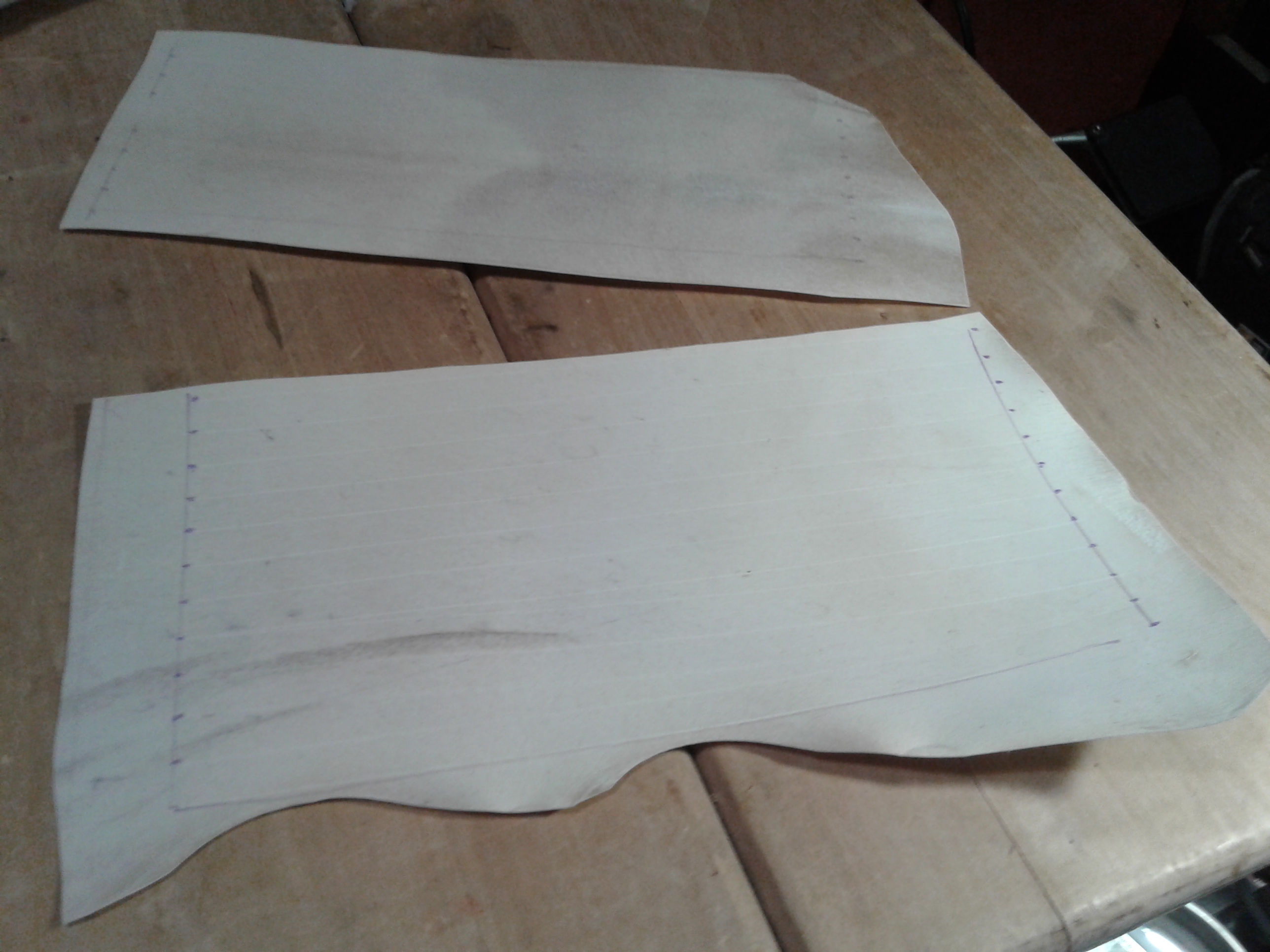
But I was unsatisfied. I bought a sheet of parchment—the vendor suggested goatskin—and cut it into likely sizes. I discovered that there was no standard size for these documents. In fact, they appeared to be size so they could contain the text. Th bottoms were often cut into strips after the turn of the Millennium, so that seals could be attached. Although my calligraphy might charitably be called “hatchet hand,” I discovered that many of the scribes of the time were no more finessed!
When we can hold events again, I fully intend to display some of the computer calligraphy, but I also intend to hand letter some more documents and display them as well and, hopefully when I have enough, can display only them.
In the meantime, I have made four charters for giving out to visitors, with places for their names. They are grants of land, notes of annual gifs and manumission from slavery, hopefully documents that will intrigue the MoPs and encourage them to find out more about a fascinating time!






 folo1
folo1
 The Anglo-Scandinavian Chronicles